Clinical evidence
Q-FFICIENCY
The QDOT MICRO™ Catheter Investigational Device Exemption Study.
Safety and effectiveness goals met. Key results included the following: 3.6% primary adverse eventsa 1.8% catheter-related primary adverse events.1,2
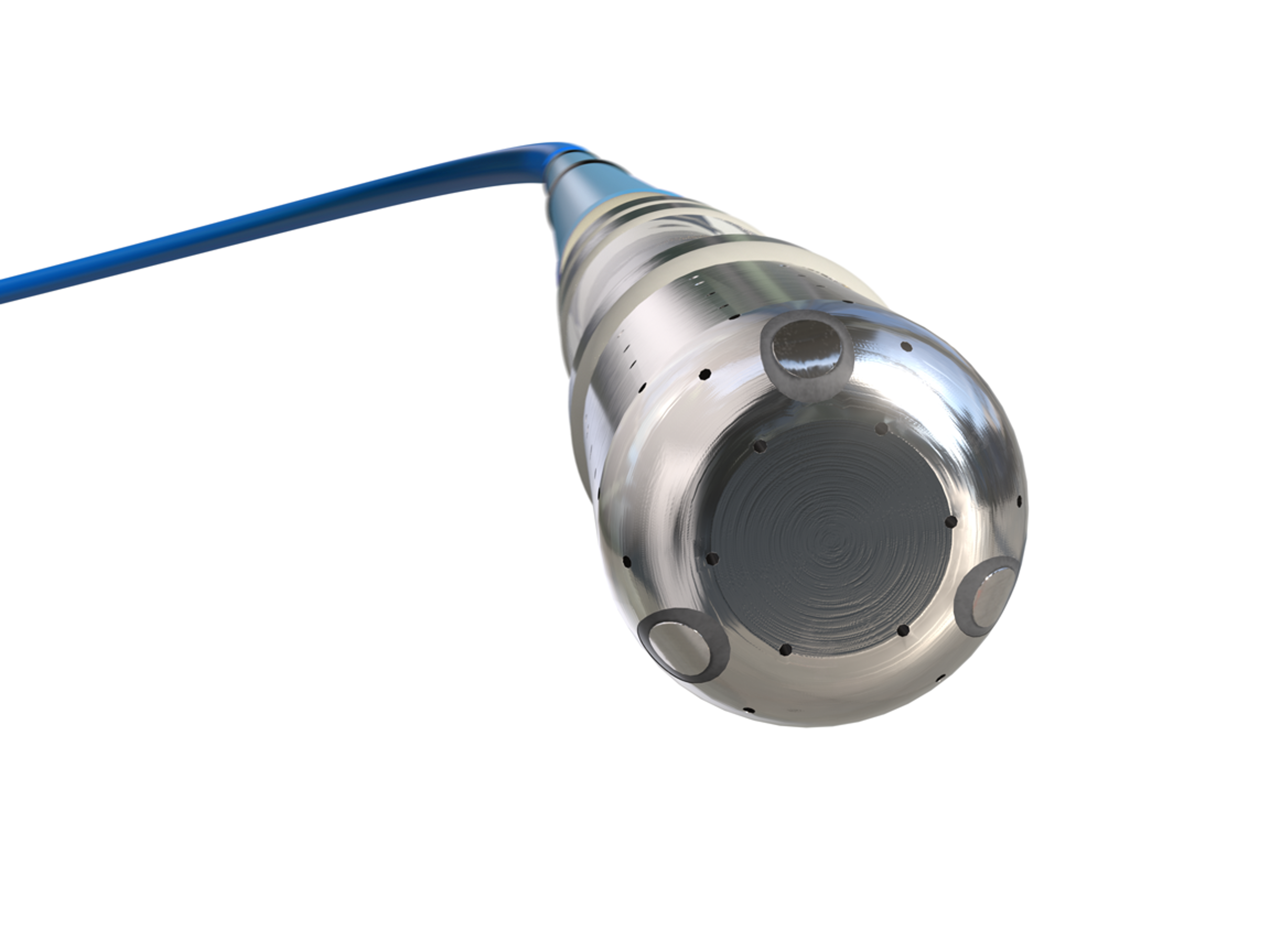
Study Design
- First PV Encirclement
- QMODE+™ Ablation Mode setting
(90 W, up to 4 seconds) required
- QMODE+™ Ablation Mode setting
- PV Touch-up
- QMODE™ setting
(25–50 W, target temperature 50°C, CF 5–30 g)
- QMODE™ setting
- Non-PV Ablation
- QMODE+™ or QMODE™ setting per investigator discretion
- Single-arm, prospective, multicenter, nonrandomized, investigational device exemption study
- 22 US institutions
- 166 evaluable participants with symptomatic paroxysmal AF
- 12-month follow-up with stringent monitoring (3-month blanking, 9-month evaluation)
- ECG (1-, 3-, 6-, and 12-month visits)
- TTM (weekly 3–5 months, monthly 6–12 months, when symptomatic)
- 24-h Holter (12-month visit)
Results
Safety and effectiveness1

3.6%
primary adverse event ratea
- The safety endpoint was met (14% performance goal)
- The catheter-related adverse event rate was low at 1.8%

77%
primary effectiveness rateb
The 12-month freedom from documented AF/AFL/AT recurrence and freedom from failure modes was 77% (50% performance goal).

86%
clinical success
(freedom from symptomatic recurrence)
The 12-month freedom from repeat ablation was 92%.
Quality of life and healthcare utilization2

Quality of life
- 88% of participants achieved clinically meaningful improvements in quality-of-life based on patient-reported AFEQT questionnaire responses.c
- 99% improvement in control of AF at 12-months postablation
- 93% improvement in relief of AF symptoms at 12-months postablation

Healthcare utilization
- The 12-month freedom from cardiovascular hospitalization was 89%. Q-FFICIENCY participants experienced significant reduction in healthcare utilization.
- 80% reduction in Class III AAD use 6–12 months postablation compared to baseline (P<0.0001)
- 94% reduction in cardioversion use during evaluation period compared to 12-months preablation (P<0.0001)
Legacy technology comparisons1
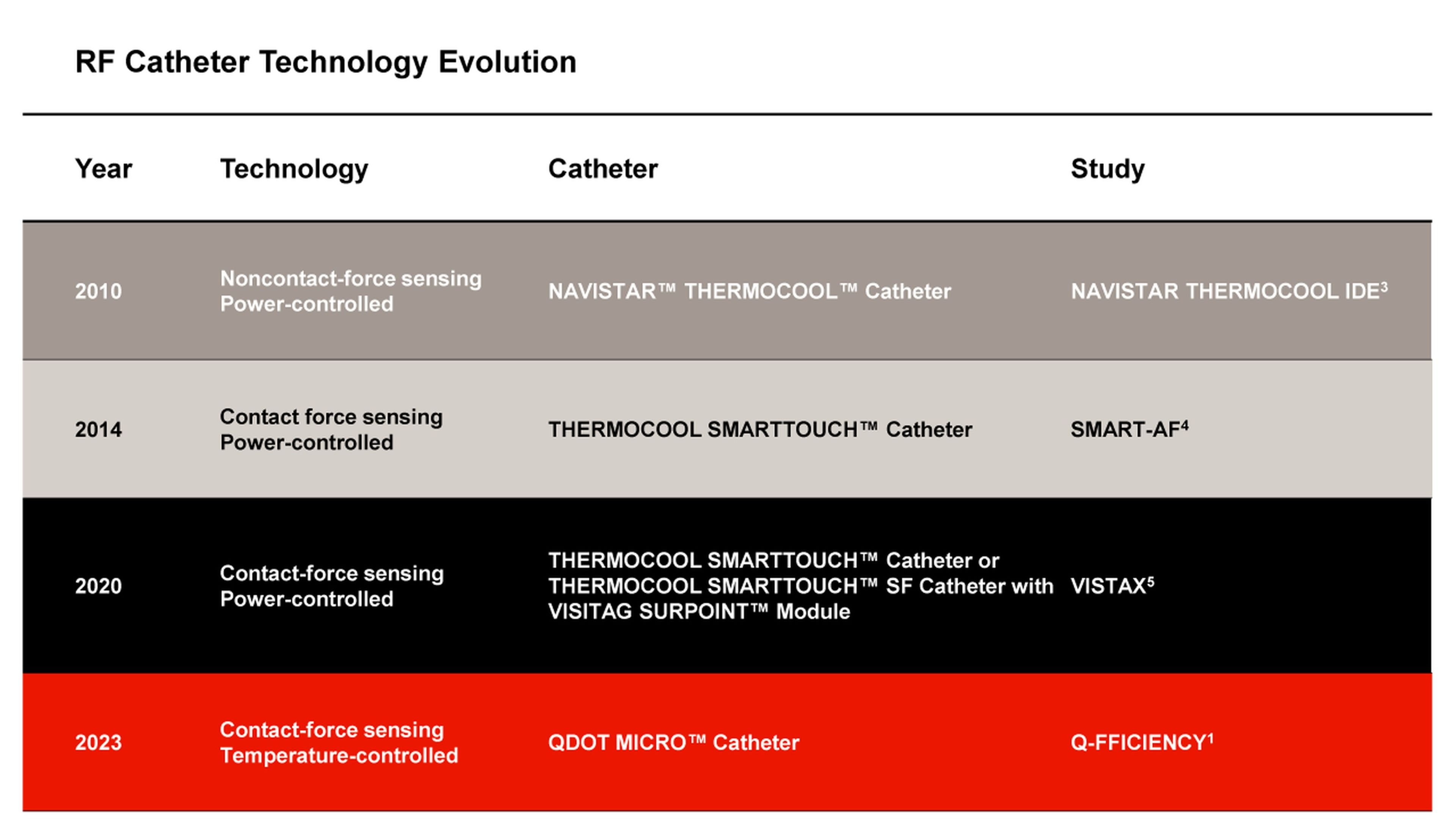
Enhanced efficacy and efficiency with QDOT-MICRO™ Catheter ablation
Compared to stringently monitored studies for previous power-controlled RF ablation technologies, temperature-controlled ablation with the QDOT MICRO™ Catheter led to 69% reduction in fluid delivery via the study catheter, 41% shorter ablation time, 82% reduction in fluoroscopy time, 30% increase in freedom from documented recurrence, and 23% increase in clinical success (freedom from symptomatic recurrence).
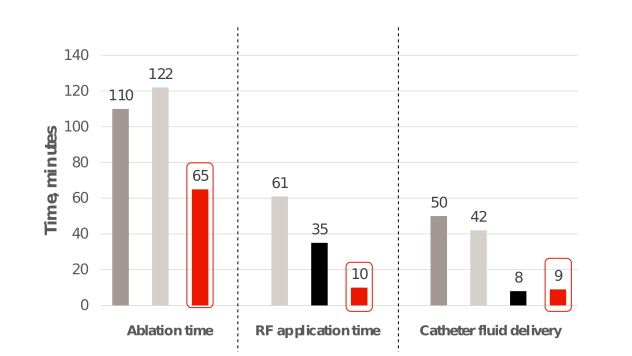
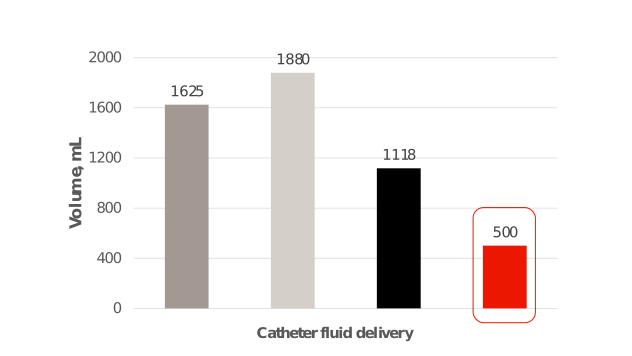
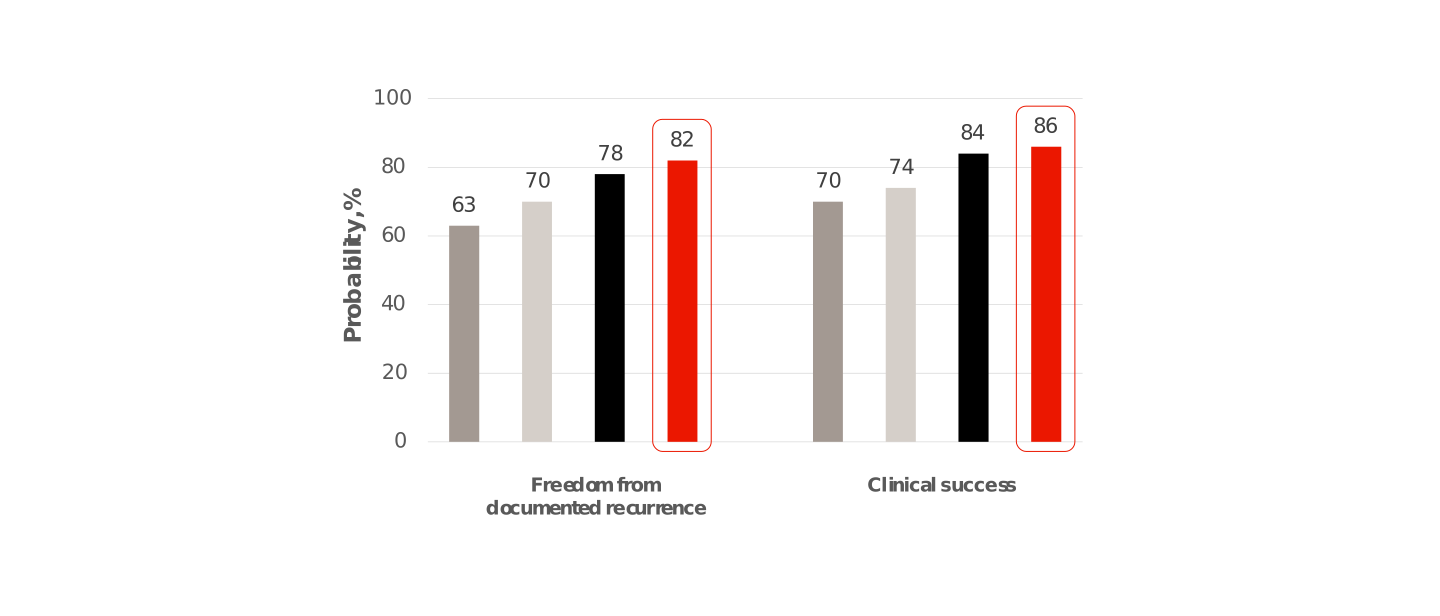
Figures adapted from: Osorio, et al. JACC Clin Electrophysiol. 2023;9(4):468-480 under the CC BY license.
Conclusions
Safety and effectiveness goals met
- Q-FFICIENCY demonstrated the safety, efficiency, and effectiveness of ablation with the QDOT MICRO™ Catheter for paroxysmal AF.
- QMODE+™ and QMODE™ ablation led to improved quality-of-life and significant reduction in AAD use, cardioversion, and cardiovascular hospitalization.
- Compared to similarly designed studies for legacy catheters, temperature-controlled ablation improved efficiency and effectiveness without compromising safety.d
Safety and effectiveness goals met
- Q-FFICIENCY demonstrated the safety, efficiency, and effectiveness of ablation with the QDOT MICRO™ Catheter for paroxysmal AF.
- QMODE+™ and QMODE™ ablation led to improved quality-of-life and significant reduction in AAD use, cardioversion, and cardiovascular hospitalization.
- Compared to similarly designed studies for legacy catheters, temperature-controlled ablation improved efficiency and effectiveness without compromising safety.d
Abbreviations, References, and Disclosures
a. Primary adverse events included death, atrioesophageal fistula, myocardial infarction, stroke/cerebrovascular accident, thromboembolism, transient ischemic attack, phrenic nerve injury/diaphragmatic paralysis, heart block, PV stenosis, pulmonary edema (respiratory insufficiency), vagal nerve injury, pericarditis, and major vascular access complication/bleeding. Atrioesophageal fistula and PV stenosis that occurring 7–90 days postablation, and cardiac tamponade/perforation occurring ≤30 days of ablation, were also considered primary adverse events.
b. The primary effectiveness endpoint was freedom from documented recurrence of AF/AFL/AT ≥30 seconds and freedom from 3 additional failure modes: acute procedural failure (failure to confirm entrance block in all PVs or use of nonstudy catheter), repeat ablation failure (>2 repeat ablation during blanking period, use of nonstudy catheter for repeat ablation during blanking, or any repeat ablation postblanking), and AAD failure (new AAD/higher dose postblanking).
c. A ±5-point change in AFEQT score is considered a clinically significant change in quality of life.
d. Comparing data from nonrandomized, independent, prospective, single-arm multicenter studies with similar designs: Q-FFICIENCY (n=166, Osorio et al 2023), NAVISTAR THERMOCOOL IDE (n=106, Wilber et al, 2010), SMART-AF (n=160, Natale et al, 2014) and VISTAX (n=329, Duytschaever et al, 2020). The Q-FFICIENCY study safety performance goal was met; the posterior mean of the primary adverse event rate was 4.2%, with a 95% Bayesian credible interval of 1.7% to 7.7%, well below the 14% performance criterion. Based on the 2017 HRS/EHRA/ECAS/APHRS/SOLAECE expert consensus statement (Calkins et al, 2017), the primary safety events observed in the Q-FFICIENCY study are in line with what is expected of catheter ablation studies for the treatment of atrial fibrillation.
AAD, antiarrhythmic drug; AF, atrial fibrillation; AFEQT, Atrial Fibrillation Effect on Quality of Life questionnaire; AFL, atrial flutter; AT, atrial tachycardia; CF, contact force; ECG, electrocardiogram; RF, radiofrequency; TTM, transtelephonic monitoring.
- Osorio J, Hussein AA, Delaughter MC, et al. Very high-power short-duration, temperature-controlled radiofrequency ablation in paroxysmal atrial fibrillation: the prospective multicenter Q-FFICIENCY trial. JACC Clin Electrophysiol. 2023;9(4):468-480.
- Hussein A, Delaughter MC, Monir G, et al. Paroxysmal atrial fibrillation ablation with a novel temperature-controlled CF-sensing catheter: Q-FFICIENCY clinical and healthcare utilization benefits. J Cardiovasc Electrophysiol. Published online October 23, 2023. doi: 10.1111/jce.16093.
- Wilber DJ, Pappone C, Neuzil P, et al. Comparison of antiarrhythmic drug therapy and radiofrequency catheter ablation in patients with paroxysmal atrial fibrillation: a randomized controlled trial. JAMA. 2010;303(4):333340.
- Natale A, Reddy VY, Monir G, et al. Paroxysmal AF catheter ablation with a contact force sensing catheter: results of the prospective, multicenter SMART-AF trial. J Am Coll Cardiol. 2014;64(7):647-656.
- Duytschaever M, Vijgen J, De Potter T, et al. Standardized pulmonary vein isolation workflow to enclose veins with contiguous lesions: the multicentre VISTAX trial. Europace. 2020;22:1645-1652
Important information: Prior to use, refer to the instructions for use supplied with the device for indications, contraindications, side effects, warnings and precautions. Caution: US law restricts this device to sale by or on the order of a physician.
In the US, THERMOCOOL™ Navigation Catheters are indicated for the treatment of drug refractory recurrent symptomatic paroxysmal atrial fibrillation, when used with CARTO® Systems (excluding NAVISTAR™ RMT THERMOCOOL™ Catheter).
The THERMOCOOL SMARTTOUCH™ SF Catheter is indicated for the treatment of drug refractory recurrent symptomatic paroxysmal atrial fibrillation (AF) and for drug refractory recurrent symptomatic persistent AF (continuous AF > 7 days but < 1 year), refractory or intolerant to at least 1 Class I or III AAD, when used with the CARTO® 3 System.
The Johnson & Johnson and its affiliates QDOT MICRO™ Catheters and related accessory devices are indicated for catheter-based cardiac electrophysiological mapping (stimulating and recording) and, when used in conjunction with a compatible radiofrequency generator, for the treatment of:• Type I atrial flutter in patients age 18 or older.• Drug refractory recurrent symptomatic paroxysmal atrial fibrillation, when used with compatible three-dimensional electroanatomic mapping systems. The Johnson & Johnson and its affiliates QDOT MICRO™ Catheters provide real-time measurement of contact force between the catheter tip and heart wall, as well as location information when used with CARTO™ 3 Navigation System.
The VISITAG SURPOINT™ Module with EPU (VISITAG SURPOINT™ Module) is compatible with the QDOT MICRO™ Catheter. Equivalent Tag Index values do not represent equivalent RF lesion size. The recommended Tag Index target values for the THERMOCOOL SMARTTOUCH™ Catheter and THERMOCOOL SMARTTOUCH™ SF Catheter (i.e., 550 for anterior/roof/ridge segments and 380 for posterior/inferior segments of PV encircling lesions) should not be used to guide ablations with the QDOT MICRO™ catheter.
The third-party trademarks used herein are the trademarks of their respective owners.
This site is published by Johnson & Johnson and its affiliates, which is solely responsible for its contents. It is intended for visitors from the United States.
US_ELP_THER_221837.1