John Adams explains how IVL—a technology he helped pioneer at Shockwave Medical—later saved his own life
The co-founder of Shockwave Medical, now part of Johnson & Johnson MedTech, explains how he co-invented a unique solution for heavily calcified arteries in cardiovascular disease and later benefited from it himself.
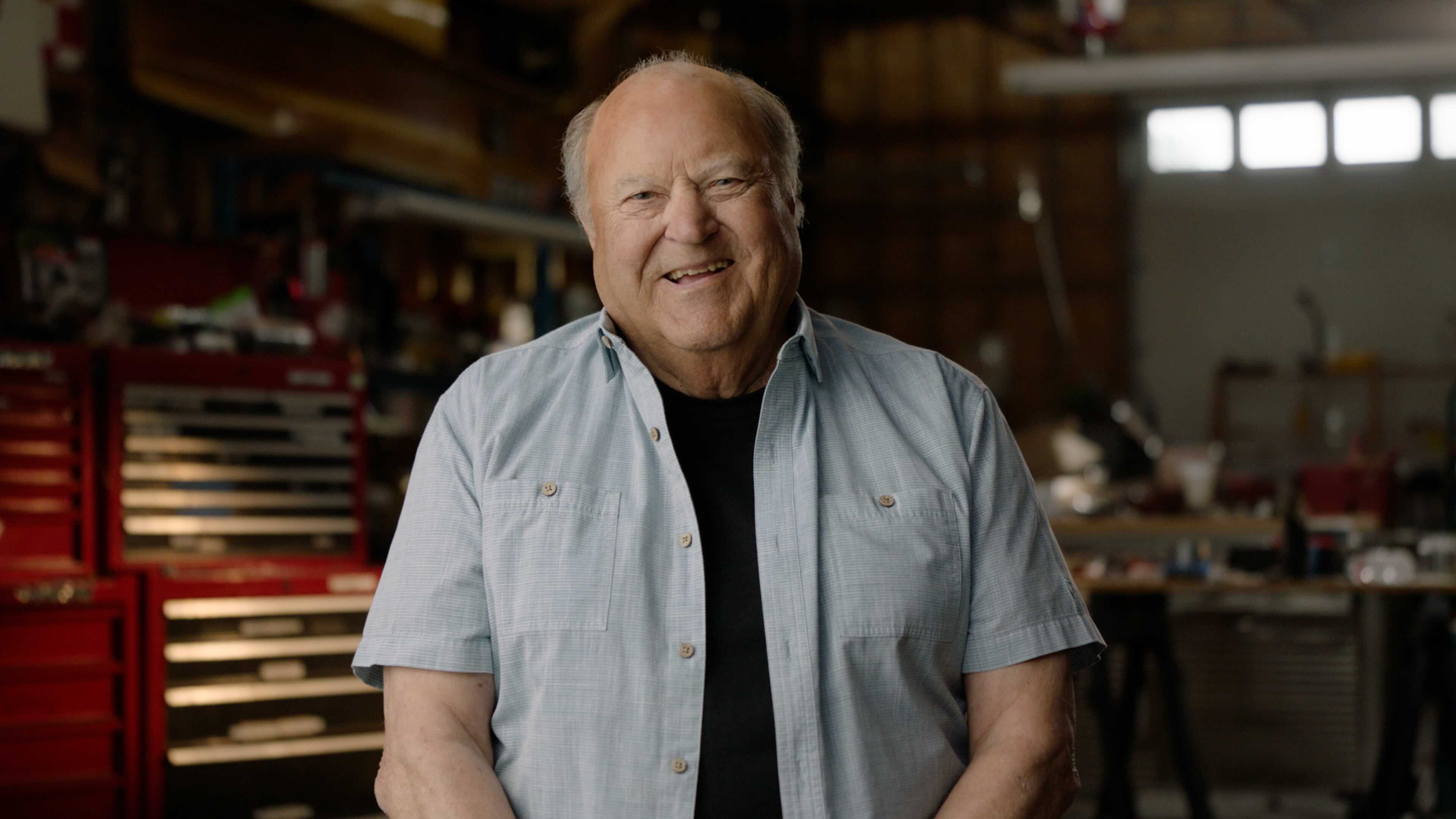
John Adams was living a full, active life as a 63-year-old medical device entrepreneur and electrical engineer back in 2009. He built his own airplane, got his pilot’s license and spent his free time flying. At work, he and his business partner, Daniel Hawkins, were developing what would become intravascular lithotripsy (IVL), at the time a brand-new technology that uses ultrasonic acoustic pressure waves to fragment calcified plaque lining artery walls and facilitate the placement of stents.1
Little did Adams know, however, that his health was silently on the decline. He wound up in the hospital with severe coronary artery disease (CAD) in 2010, an event he now attributes to hardened plaque in his arteries. IVL was still just a prototype then, and though Adams went on to have a quintuple bypass surgery and mostly got back to his usual self, the course of his health shifted again in 2019. His chest pain returned.
When Adams’ doctor told him this time around that the arteries in his heart were “heavily calcified,” Adams had a eureka moment: He was the ideal candidate to get treated with his own invention.
Learn about Adams’ remarkable story from inventor to patient of his own creation, plus how—and why—IVL is so groundbreaking.
Q: How did you and your partner come up with the concept behind IVL?
John Adams: When brainstorming ideas for a device that Daniel and I could develop and form a company around, we thought of peripheral artery disease (PAD)—a condition in which narrowed arteries restrict blood flow in the legs.2 Those patients all had calcified arteries in their legs, and to our knowledge, existing treatments for calcification at the time—angioplasty and atherectomy—had room for improvement. They can sometimes risk damage to the endothelial lining and may not fully open the arteries in those with very deep or hard plaque.3 That makes it trickier for physicians to place stents in arteries and restore blood flow.
As I thought about the problem, I remembered an experience with lithotripters, which are machines that transmit sonic waves through the body, originally developed to break up kidney stones.4 I had been making defibrillators, so when a doctor complained about one causing a fire in a patient’s bed, I investigated how that could happen. Through this process, I learned that defibrillators could arc, which occurs when an electric shock moves between the pads, instead of passing into the patient.
At that point, Daniel and I joked, “Well, maybe we could put lithotripsy inside an angioplasty balloon, and then we could crack the calcium in the arteries and treat it that way.” Lithotripters are great big things, and the idea of putting one inside a tiny angioplasty balloon was laughable. But that’s the technical solution that would become IVL.
It was our idea that if we could apply Shockwaves within the artery—that is, with intravascular lithotripsy—we could crack the calcium into little pieces, and that would allow us to open up the artery more gradually with less trauma.
You said you were initially joking about utilizing lithotripsy in such a tiny space as the inside of an artery. How did you make that a reality?
JA: We started by experimenting with a much smaller device. Our first challenge was figuring out whether we could get enough energy down a tiny, flexible wire from the generator to the end of the catheter to create a Shockwave. Through testing, we discovered that, as long as the current is short, we could get a lot of voltage down a wire and not cause it to heat up and break.
We also questioned whether we could send enough energy into the angioplasty balloon to crack the calcium outside of it. We initially drilled a hole in a stick of chalk and placed electrodes inside. A Shockwave could shatter the chalk—but chalk isn’t all that hard to break, so I thought we should try to crack a harder kind of calcium.
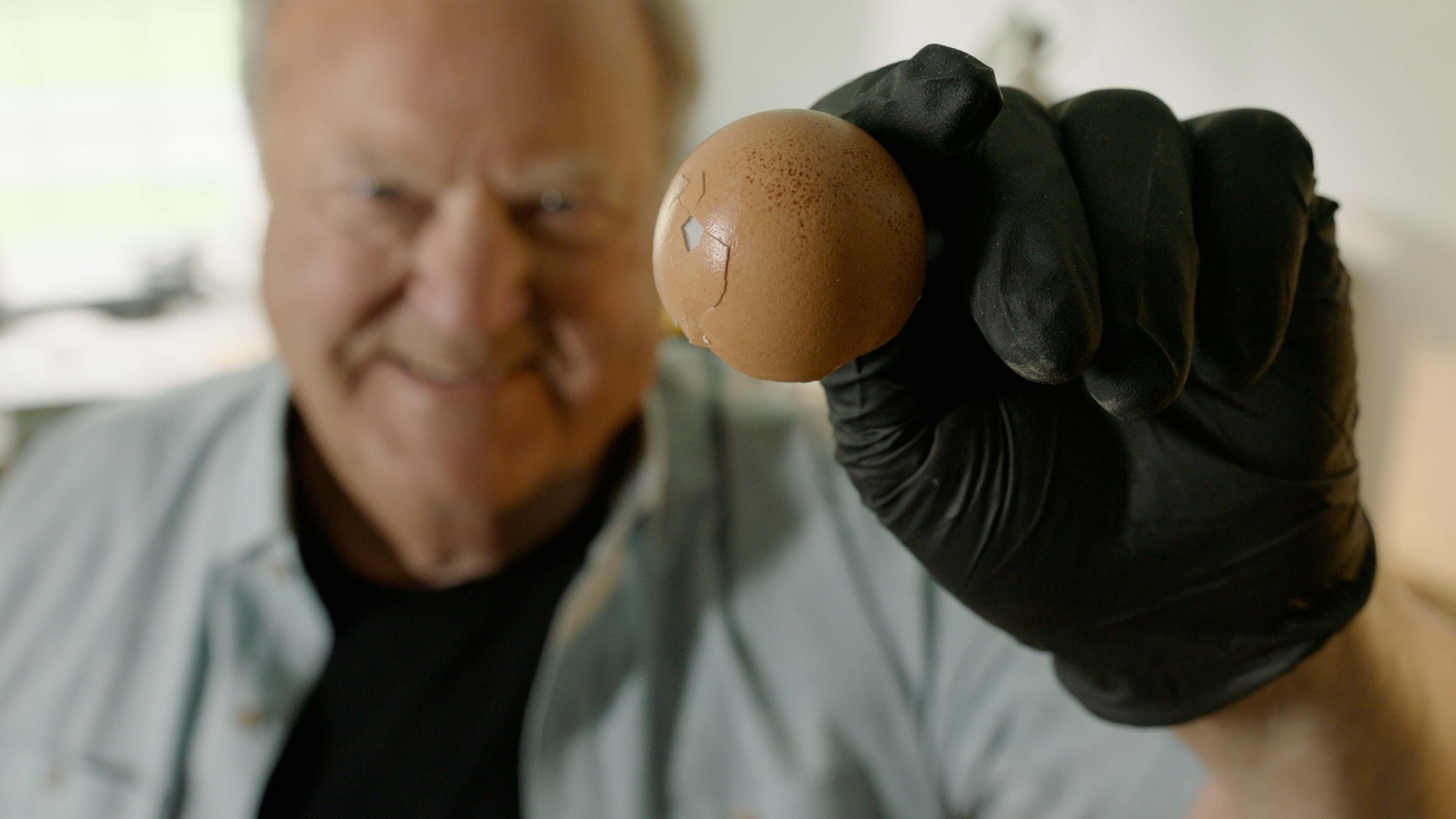
This is when the idea of an eggshell came to me: I placed electrodes inside an egg and blew a perfect hole in the shell. I also noticed the membrane was still intact, proving that we could not only crack calcium—a good surrogate for plaque—but we could do it through the endothelial layer without damaging it. It was the initial proof of concept for IVL that led to the founding of Shockwave Medical in 2009.
A picture of that cracked egg earned us funding that allowed us to solve other problems.5 For instance, we realized we needed a pair of electrodes—one set on either side of the guidewire—to shock around the circumference of an artery. From there, we worked with doctors to engineer a device that was easy to use, one that allowed a surgeon to send Shockwaves down the length of the balloon and treat long plaque lesions with a unique waveform delivered with the press of a button. That was the prototype that would allow us to do preclinical and clinical research and eventually disrupt the status quo of calcium modification by bringing IVL to market.
Shortly after the egg breakthrough, as IVL was coming to life, you started having heart issues. Can you talk more about this?
In 2010, I had my first episode of angina, chest pain that occurs when the heart doesn’t receive enough blood.6 Over time, the pain started to get worse, so I finally decided I’d better go to the ER and have them check me out. I drove myself there, and the staff immediately put an EKG on me. An angiogram told me that I had very bad coronary artery disease—the doctor even told my wife that she should bring the family in. They didn’t say anything about calcium or plaque deposits, though, so I didn’t connect the dots initially with IVL. I was just told that my arteries had very narrow passageways to the point where they couldn’t use angioplasty.
Instead, they moved me straight to a quintuple bypass. That night, my chest was opened, and they grafted vessels onto my heart to create detours around five blocked arteries. Looking back, it’s possible that, if IVL had existed, it could’ve been used to open my arteries—and I might’ve avoided the bypass.
What was it like to go from pioneering this technology to experiencing it firsthand as a patient?
JA: Grafts sometimes only last about 10 years after bypass surgery,7 and mine started to fail sooner. By 2017, I was having difficulty with physical activity, including pulling my airplane out of the hangar. I figured I was just getting old and weak, so I sold the plane.
By 2019, I had angina again, so I had another angiogram. My doctor told me they couldn’t do anything to help because my arteries were heavily calcified. I wasn’t offered another bypass either, probably because I had five done. I was told I just had to go home and live with it. Immediately, I thought to myself, I have a better idea: I’m going to go to Europe and get treated with IVL. While the U.S. Food and Drug Administration had cleared IVL for peripheral applications in 2016,8 it hadn’t yet been cleared for CAD—that came later in 2021.9
I arrived in London fairly disabled, walking very slowly. I was treated with IVL on a Monday, rested at the hotel on Tuesday, and by Wednesday, I was sightseeing.10
The procedure restored blood flow to the right side of my heart. The left side was still being fed by bypass grafts, but I also had a chronic total occlusion (CTO) of the left main. The doctor tried to cross the CTO with the catheter to shock it, but he wasn’t able to. Later that year, a physician at a clinical site at the University of Washington used rotational atherectomy to first remove plaque and then used IVL to fully open the artery.
How do you feel several years after receiving IVL?
JA: Knowing now that I had a CTO of the left main, I am convinced that I wouldn’t be talking to you today if it hadn’t been for Shockwave IVL. So, the bypass surgery saved me, and then IVL came and saved me again.
The technology I helped create has been used to successfully treat over 1 million people globally, and the doctors who use it often report a low rate of complications.11 Most importantly, I’m grateful and proud to have founded a company that saved not only my life, but the lives of countless others.
I have a few stents in some of the places where there were blockages, and I take several heart medications—but generally, I can do whatever I want now, and I am very active.
Last year, I was feeling pretty darn good, as I do now, and I decided I really missed flying, so I bought another airplane. Right now, I’m taking lessons to get recertified so I can fly it, and both of my sons are getting their pilot licenses, too, so we can all fly together.

What’s it like to see the company you started help so many patients like yourself?
When I think about the fact that so many patients have now been treated with Shockwave IVL, it really reinforces how necessary this technology was and is—it’s clear physicians need a tool like this to modify calcium safely, consistently and effectively. Seeing Shockwave IVL continue to evolve makes me proud and gives me a lot of confidence that it’s going to keep helping more patients.
In the years since my treatment, Shockwave Medical, now a part of Johnson & Johnson, has launched several IVL devices to address difficulties with getting the balloon across the most calcific lesions. Shockwave C2 Aero is the latest innovation, launched in the U.S. and Japan in May 2026, is the latest innovation and the fifth-generation catheter for coronary applications. IVL’s capabilities are also being studied in the carotid space and other vascular beds.
That’s what excites me most. This technology isn’t standing still. It keeps evolving because physicians keep pushing it forward, and with each new advancement, Shockwave IVL has the potential to help even more patients get back to living their lives.
References
- Butt N, Khalid N, Shlofmitz E. Intravascular Lithotripsy. [Updated 2023 Aug 8]. In: StatPearls [Internet]. Treasure Island (FL): StatPearls Publishing; 2026 Jan-. Available from: ncbi.nlm.nih.gov
- MedlinePlus. (2024, April 16). Peripheral arterial disease. U.S. National Library of Medicine.
- Zimoch, W., Florek, K., Błaszkiewicz, M., Buzun, W. H., Glińska, J., Zalewska, Z., Radek, K., Kasztura, M., Jankowska, E. A., & Reczuch, K. (2025). Impact of Rotational Atherectomy on Endothelial Integrity and Platelet Activation. International journal of molecular sciences, 26(24), 11932.
- ScienceDirect. (n.d.). Lithotripter. Elsevier.
- Rocha-Singh, K. J. (2025, November). Proven crack record: How Shockwave's PAD innovations continue to shatter calcium barriers. Endovascular Today.
- Mayo Clinic Staff. (2024, October 25). Angina: Symptoms and causes. Mayo Clinic.
- Parang, P., & Arora, R. (2009). Coronary vein graft disease: pathogenesis and prevention. The Canadian journal of cardiology, 25(2), e57–e62.
- U.S. Food and Drug Administration. (2016). K161384: 510(k) summary (K161384).
- Shockwave Medical. (2024, March 12). Shockwave intravascular lithotripsy FDA approved to treat advanced heart disease.
- Individual patient story. This experience is not necessarily representative of all patients treated with IVL. Results may vary based on patient characteristics and clinical circumstances.
- Shockwave Medical, Inc. (n.d.). Intravascular lithotripsy (IVL) overview for patients. Retrieved July 1, 2026, from shockwavemedical.com
In the US: Rx Only. Prior to use, please reference Instructions For Use for information on indications, contraindications, warnings, precautions, and adverse events.
www.shockwavemedical.com/IFU
Product availability may vary by country.
SPL 83171 REV. B