Pulsed field ablation (PFA)
We provide you with solutions for safe, effective ablation techniques that can be reproduced with confidence.
Adding Pulsed Field Ablation (PFA) to our existing Radiofrequency (RF) portfolio enables a patient-tailored approach for the treatment of AF. Fully-integrated mapping with the CARTO™ 3 System provides real-time
tissue to electrode feedback and lesion tagging which have proven to be important factors for durable lesion formation.1

Evidence

VARIPURE
Zero serious adverse events were reported after ablation with the VARIPULSE™ Catheter, including zero neurovascular events.

Application repetition and electrode–tissue contact with a VLCC
This study determined that lesion formation is dependent on application repetition and contact. Both repetition and catheter contact independently lead to deeper lesion formation are critical for PFA delivery.

In vivo assessment of catheter-tissue contact
This preclinical study emphasizes the importance of tissue contact in optimizing circumferential lesion. PF ablation was applied to 5 swine with varying levels of contact as determined by ultrasound and the tissue proximity indicator (TPI). Lesion transmurality was achieved in all lesions with consistent contact or tissue tenting but only in 54.5% with no/minimum contact.

inspIRE deep sedation analysis
29 participants in the insIRE study received sedation during pulse filed ablation procedure with the VARIPULSE catheter due to risks of general anesthesia. The deep sedation protocol, when used in conjunction with VARIPULSE™ platform, was safe and achieved positive feedback reported by patients.

admIRE subanalysis
In a subanalysis of admIRE patients, it was noted that the full patient cohort primary efficacy endpoint (PEE) of 74.6% increased to 85% for patients that received 73-96 applications (24-32 ablations).

MANIFEST RE-DO
MANIFEST RE-DO investigated repeat ablation due to clinical recurrence of AF or AT following treatment with the pentaspline PFA catheter, Farawave. In this repeat procedure, it was found 45% of patients where imaging or mapping modality was previously used was univariately associated with durable PVI.

First experience with a novel VLCC
This study utilized both the high-density mapping catheter and the VLCC in all patients. A high correlation between LA post-ablation remapping of low voltage areas and ablated regions was observed. The integration of the 3D mapping system allows for precise labeling of every PFA application and disabling location tags deactivated electrodes in the event of electrode overlapping. A high degree of precision was observed in the overlap of ablation tags and low voltage areas.

NEMESIS
The NEMESIS study evaluated the collateral effects of PFA, including biomarkers that indicate hemolysis. The PFA group revealed greater red cell destruction compared to the RFA group because high-voltage electrical fields may have greater effect on circulating blood. This increased with the number of applications and continued contact with blood (not tissue).

Part of an integrated system
As ablation energy sources evolve, the fully-integrated CARTO™ 3 System is the cornerstone of catheter ablation to enable accurate, real-time catheter visualization and empower you to make optimal, patient-tailored treatment decisions.*
Intuitive. Versatile. Reproducible.
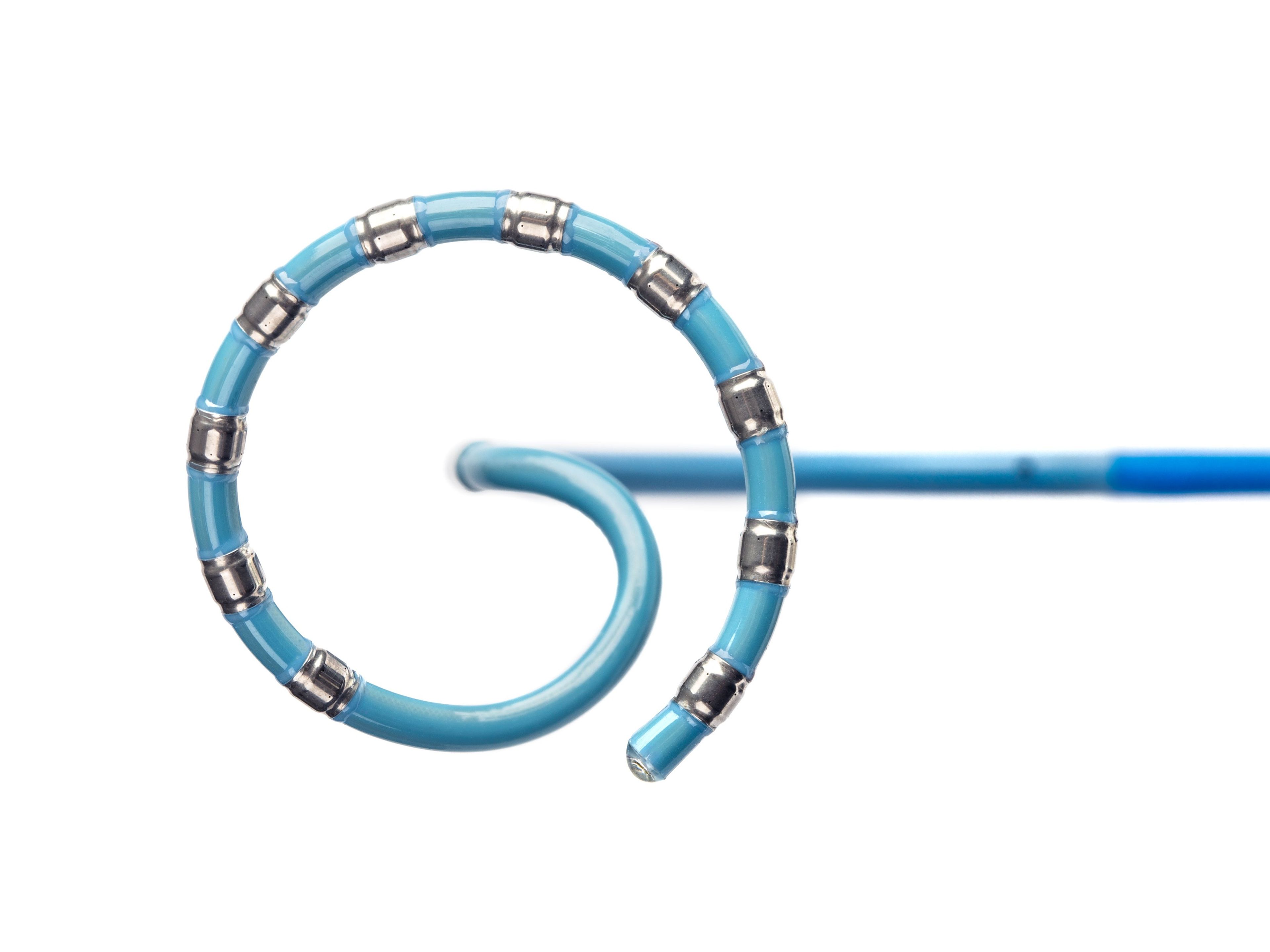
VARIPULSE™ Platform
Johnson & Johnson MedTech is bringing the first CARTO-integrated Pulse Field Ablation platform with the VARIPULSE™ Catheter, an intuitive pulmonary vein isolation solution powered by the TRUPULSE™ Generator.
Zero
85%
*admIRE trial n=85. PAF only patients, 1 ablation = 3 applications
63.5%
30%
Supporting with excellence

Expertise at your side
Our team of clinical specialists have a deep knowledge in every aspect of the mapping technology to complement your team’s skills and offer real-time insights when you need them.

Training Expertise Centers
We offer a comprehensive site visit program to physicians and fellows who are interested in observing safe and effective utilization of our current technology during complex ablations in a clinical setting.

Therapy Advancement Program
Through every step of your journey, our Therapy Advancement Program (TAP) empowers you with the resources, tools, and support to treat more AFib patients—while potentially increasing access to care.

Patient Education Resources
With a focus on clear and accessible AFib education, insights from physician thought leaders, and compelling patient stories, Get Smart About AFib aims to be a trusted resource where physicians and providers can confidently refer their patients.
References
Di Biase L, Marazzato J, Gomez T, et al. Application repetition and electrode–tissue contact result in deeper lesions using a pulsed-field ablation circular variable loop catheter. EP Europace. 2024;26(9):euae220.
- Almorad A, Sebag FA, Kronborg MB, et al. Acute Safety, Effectiveness and Procedural Workflow for the Pulsed Field Ablation Variable Loop Circular Catheter in AF Procedures: A Prospective, Multicenter, Postmarket Clinical Trial. Presented at ESC 2025; September 1, 2025; Madrid, Spain. Pending formal publication.
- Porterfield C. Real-world safety profile of a multi-electrode variable loop PFA catheter. Presented at KCHRS 2025; August 16, 2025; Kansas City, MO. Pending formal publication.
- Reddy V, Calkins H, Mansour M, et al. Pulsed field ablation to treat paroxysmal atrial fibrillation: safety and effectiveness in the admIRE pivotal trial. Circulation. Published online September 11, 2024. doi: 10.1161/CIRCULATIONAHA.124.070333.
- De Potter T, Grimaldi M, Duytschaever M, et al. Predictors of success for pulmonary vein isolation with pulsed field ablation using a variable loop catheter with 3D mapping integration: complete 12-month outcomes from inspIRE. Circ Arrhythm Electrophysiol. 2024. doi: 10.1161/CIRCEP.123.012667.
*Biosense Webster, Inc.’s products with FDA approved/cleared instructions for use to support fluoro alternative workflows when used with the CARTO™ 3 System include the following: THERMOCOOL SMARTTOUCH™ SF Catheter, THERMOCOOL SMARTTOUCH™ Catheter, VARIPULSE™ Catheter, CARTO™ VIZIGO™ Bi-Directional Guiding Sheath, PENTARAY™ NAV ECO High Density Mapping Catheter, OCTARAY™ Mapping Catheter with TRUEref™ Technology, OPTRELL™ Mapping Catheter with TRUEref™ Technology, DECANAV™ Mapping Catheters, and Webster™ CS Catheter.
Important information: Prior to use, refer to the instructions for use supplied with this device for indications, contraindications, side effects, warnings and precautions. Caution: US law restricts this device to sale by or on the order of a physician.
Always verify catheter tip location using common clinical practice for real-time verification (inspection of IC signals, direct imaging guidance such as fluoroscopy or ultrasound, etc.) and consult the CARTO™ 3 System User Guide regarding recommendations for fluoroscopy use.
Canpolat, U. et al (2020). State of Fluoroless Procedures in Cardiac Electrophysiology Practice. J Innov Cardiac Rhythm Management. 11(3), 4018–4029.
Sommer, P. et al (2018) Safety profile of near-zero fluoroscopy atrial fibrillation ablation with non-fluoroscopic catheter visualization: experience from 1000 consecutive procedures, EP Europace, Volume 20, Issue 12, Pages 1952–1958.
The THERMOCOOL SMARTTOUCH™ SF Catheter is indicated for the treatment of drug refractory recurrent symptomatic paroxysmal atrial fibrillation (AF) and for drug refractory recurrent symptomatic persistent AF (continuous AF > 7 days but < 1 year), refractory or intolerant to at least 1 Class I or III AAD, when used with the CARTO™ 3 System.
US_ELP_THER_406469