GYNECARE INTERCEED™ Absorbable Adhesion Barrier
Protect beyond the procedure
GYNECARE INTERCEED™ Absorbable Adhesion Barrier is indicated as an adjuvant in open (laparotomy) gynecologic pelvic surgery for reducing the incidence of postoperative pelvic adhesions after meticulous hemostasis is achieved consistent with microsurgical principles. Studies have shown that adhesions formed in 55- 100% of patients who had reproductive surgery performed at laparotomy.1,2AB This can sometimes cause clinical consequences including infertility, chronic pelvic pain (CPP), small bowel obstruction (SBO), intraoperative complications, and subsequent surgery, but these complications may not always occur. 3-5 GYNECARE INTERCEED™ Absorbable Adhesion Barrier has been shown in multiple gynecologic studies to reduce the rate of adhesion formation.6-9C



About this device
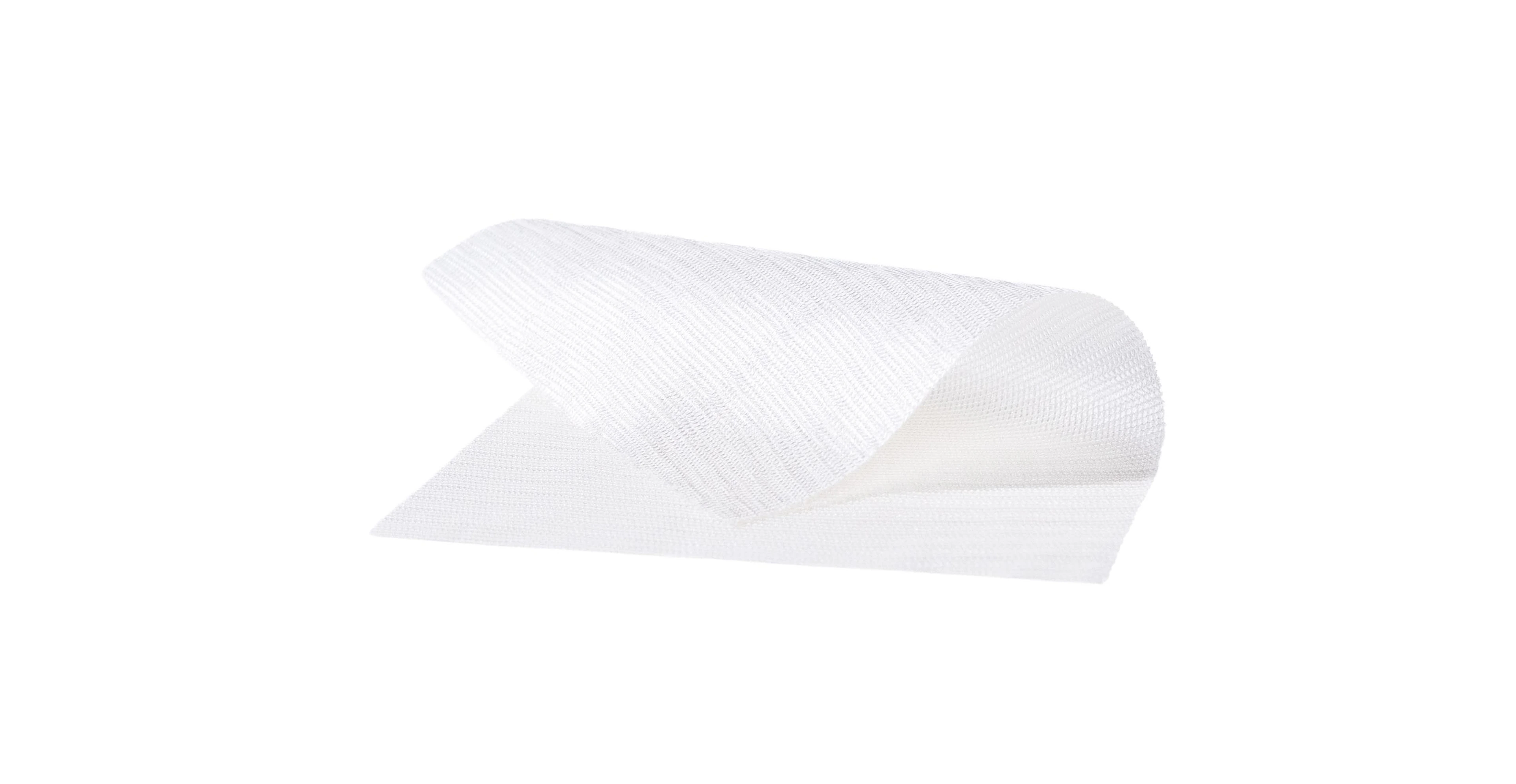
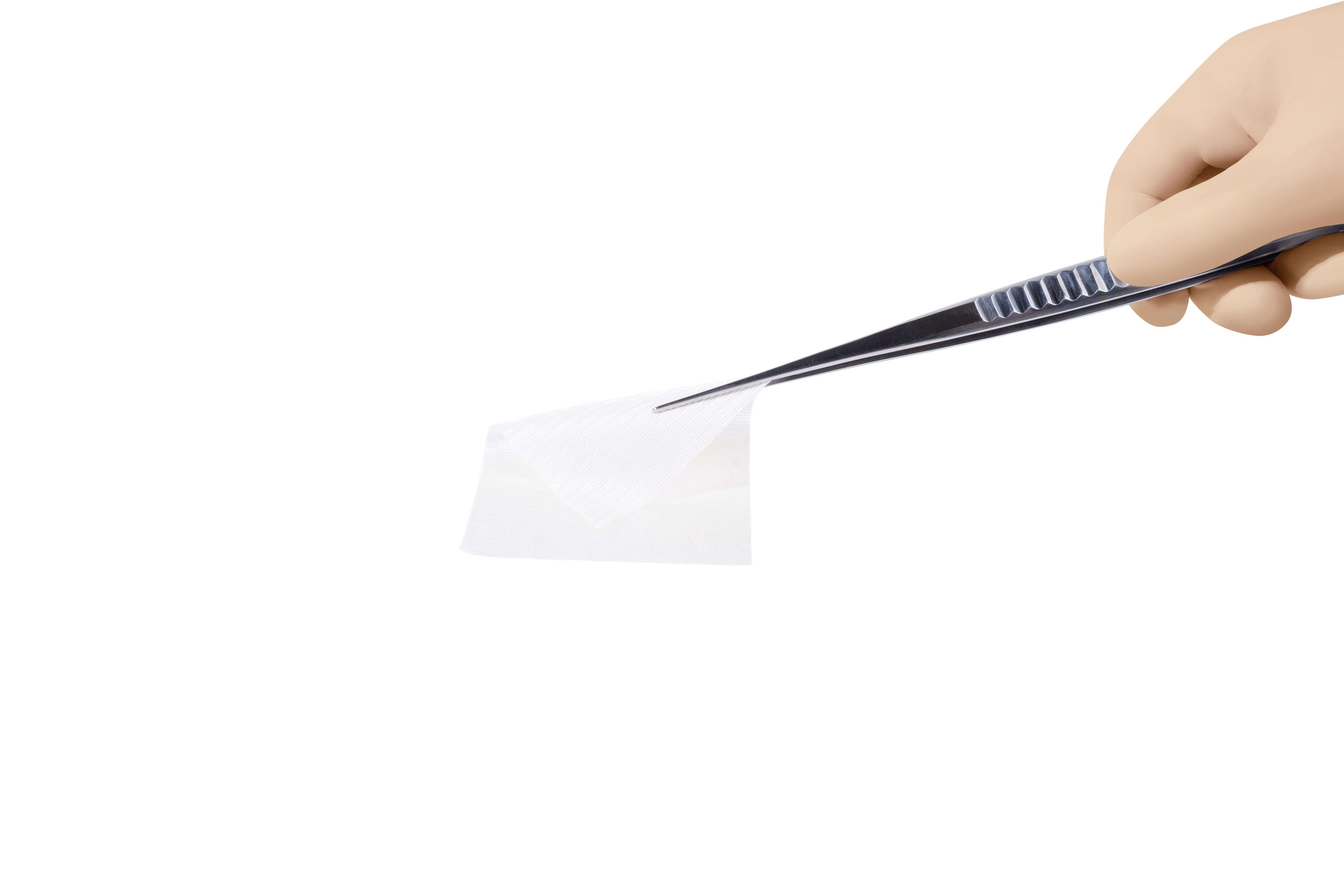
GYNECARE INTERCEED™ Absorbable Adhesion Barrier is a sterile, single-use-only, absorbable, off-white knitted fabric prepared by the controlled oxidation of regenerated cellulose. It reduces the formation of adhesions by physically separating the surfaces of tissues that are adjacent to each other during the reperitonealization phase.9
Specialties
Gynecology
Procedures
Ahesiolysis, Oophorectomy, Salpingectomy, Myomectomy, Hysterectomy, and Pelvic Floor Reconstruction
Economic benefit
A 2015 budget impact model from the hospital perspective predicts that a 75% use of GYNECARE INTERCEED™ Absorbable Adhesion Barrier would produce cost savings for all open gynecologic procedures.10
Potential impact of implementing GYNECARE INTERCEED™ Absorbable Adhesion Barrier in gynecology surgery.10
- OR Time savings: -$41,078
- Shorter length of stay: -$178,776
- Fewer Readmissions: -$458,220
- Net cost of uptake to hospital: -$540,823
Clinical evidence
GYNECARE INTERCEED™ has been shown in various gynecologic studies to:
- Significantly reduce the incidence of both new and reformed adhesions11-13
- Be clinically effective across multiple gynecological procedures11
- Be up to 2.5 times more effective in reducing the risk of adhesions14D
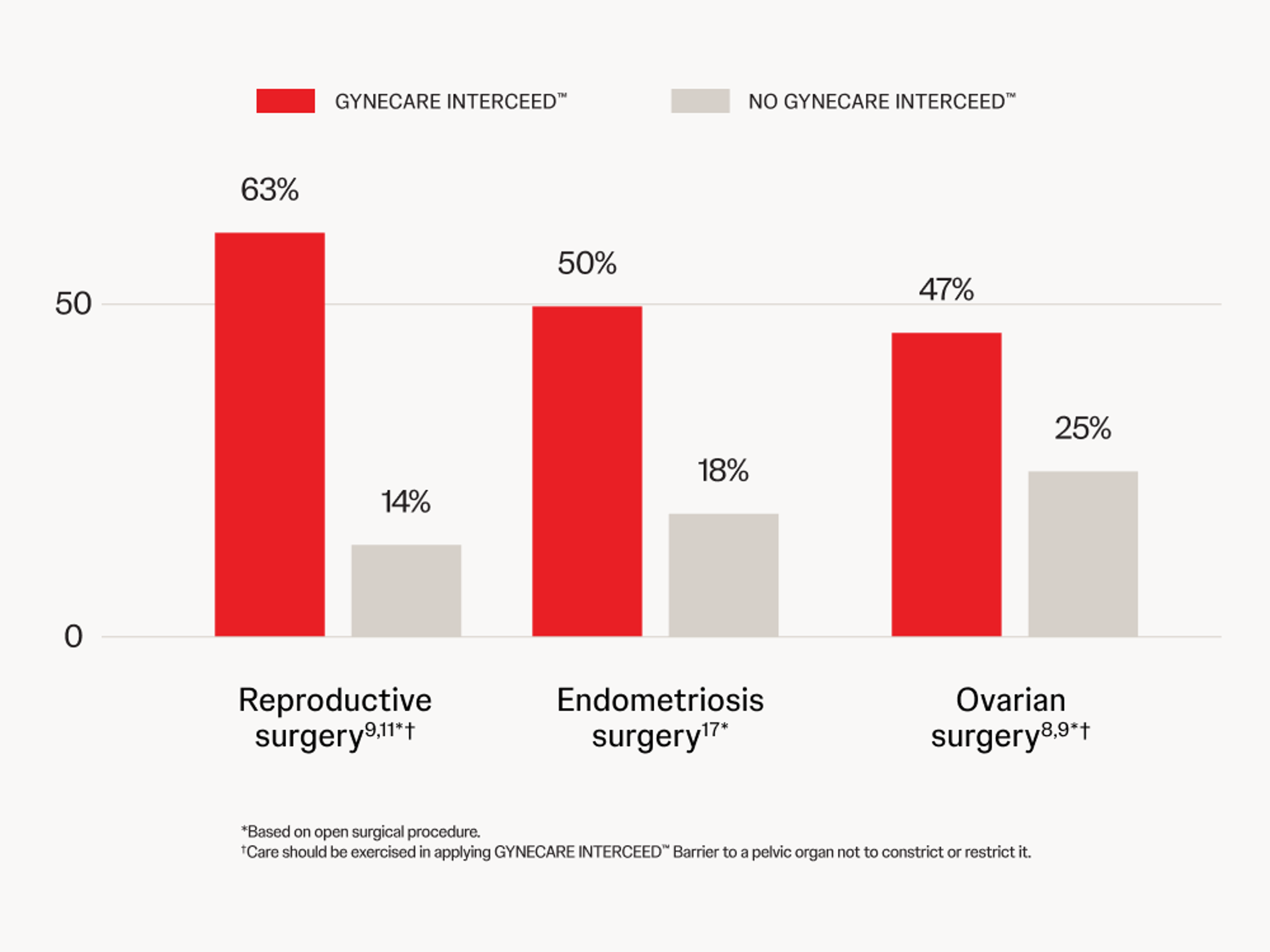
Percent of adhesion-free outcomes:
- Reproductive surgery – 63% vs. 14% without GYNECARE INTERCEED™8,9C
- Endometriosis surgery – 50% vs. 18% without GYNECARE INTERCEED™15
- Ovarian surgery – 47% vs. 25% without GYNECARE INTERCEED™7,9C
- Tubal surgery - 50% vs 24% without GYNECARE INTERCEED™16
- Fimbria surgery - 58% vs 38% without GYNECARE INTERCEED™16
Features & benefits

Protective and effective
GYNECARE INTERCEED™ was 1.5-2.5x more effective than good surgical technique alone in reducing the risk of adhesions.14D

Protect beyond the procedure
GYNECARE INTERCEED™ is an absorbable adhesion barrier made of oxidized regenerated cellulose. It is a sterile absorbable off-white knitted fabric prepared by the controlled oxidation of regenerated cellulose. It is designed to provide an extra layer of protection against adhesion formation. GYNECARE INTERCEED™ separates tissue surfaces as the peritoneal layer heals.9
Explore the product
For additional clinical questions, please call 1-877-384-4266
How is GYNECARE INTERCEED™ used?
GYNECARE INTERCEED™ is positioned on the surgical site immediately before closure to reduce adhesion formation by physically separating opposing tissue surfaces during the period of reperitonealization.9
GYNECARE INTERCEED™ vs Seprafilm
Unlike Seprafilm, INTERCEED exhibits in-vitro bacteriostatic efficacy against the following bacteria commonly associated with SSIs: MRSA, MRSE, VRE, and E.coli.17E
A trusted legacy of clinical evidence
GYNECARE INTERCEED™ Absorbable Adhesion Barrier when used according to Instruction For Use has been used efficaciously for decades in a wide variety of open gynecologic procedures.14,18
What is GYNECARE INTERCEED™?
GYNECARE INTERCEED™ is an absorbable adhesion barrier designed to provide an additional layer of protection for a wide range of procedures, including Ahesiolysis, Oophorectomy, Salpingectomy, Myomectomy, Hysterectomy, and Pelvic Floor Reconstruction.9
Up to 20% of women with adhesions develop
peritoneal infertility19
When adhesions are left to chance, patients are left at risk. GYNECARE INTERCEED™ is designed to address the risk of adhesion formation across various open gynecologic procedures.9
Supporting documentation
References
Warning
The safety and effectiveness of GYNECARE INTERCEED™ Absorbable Adhesion Barrier in laparoscopic surgery or any procedures other than open (laparotomy) gynecologic microsurgical procedures have not been established.
GYNECARE INTERCEED™ Absorbable Adhesion Barrier Essential Product Information
INDICATIONS
GYNECARE INTERCEED™ Absorbable Adhesion Barrier is indicated as an adjuvant in open (laparotomy) gynecologic pelvic surgery for reducing the incidence of postoperative pelvic adhesions after meticulous hemostasis is achieved consistent with microsurgical principles.
CONTRAINDICATIONS
The use of GYNECARE INTERCEED™ Absorbable Adhesion Barrier is contraindicated in the presence of frank infection.
GYNECARE INTERCEED™ Absorbable Adhesion Barrier is not indicated as a hemostatic agent.
Appropriate means of achieving hemostasis must be employed.
WARNINGS
Postoperative adhesions may be induced by GYNECARE INTERCEED™ Absorbable Adhesion Barrier application if adjacent tissues (eg, ovary and tube) and structures are coapted or conjoined by the device, or if GYNECARE INTERCEED™ Absorbable Adhesion Barrier is folded, wadded or layered. Care must be taken to apply GYNECARE INTERCEED™ Absorbable Adhesion Barrier in single layers, interposed between adjacent anatomic structures at risk for adhesion formation.
Postoperative adhesions may occur in the presence of GYNECARE INTERCEED™ Absorbable Adhesion Barrier if meticulous hemostasis is not achieved prior to application. GYNECARE INTERCEED™ Absorbable Adhesion Barrier must not be used if meticulous hemostasis has not been achieved or if blood contacts the product prior to its application.
As with all foreign substances, GYNECARE INTERCEED™ Absorbable Adhesion Barrier should not be placed in a contaminated surgical site. Potentially contaminated surgical sites include hysterotomy following labor and/or prolonged rupture of membranes. The performance of GYNECARE INTERCEED™ Absorbable Adhesion Barrier at potentially contaminated surgical sites has not been determined.
PRECAUTIONS
Use only a single layer of GYNECARE INTERCEED™ Absorbable Adhesion Barrier, since multiple layers of packing or folding will not enhance the adhesion barrier characteristics and may interfere with the absorption rate of GYNECARE INTERCEED™ Absorbable Adhesion Barrier. Care should be exercised in applying GYNECARE INTERCEED™ Absorbable Adhesion Barrier to a pelvic organ not to constrict or restrict it.
If the product comes in contact with blood prior to completing the procedure, it should be discarded, as fibrin deposition cannot be removed by irrigation and may promote adhesions formation.
Ectopic pregnancies have been associated with fertility surgery of the female reproductive tract. No adequate and well-controlled studies have been conducted in women who have become pregnant within the first month after exposure to GYNECARE INTERCEED™ Absorbable Adhesion Barrier. No data exist to establish the effect, if any, of GYNECARE INTERCEED™ Absorbable Adhesion Barrier on the occurrence of ectopic pregnancies. No teratogenic studies have been performed. Therefore, an avoidance of conception should be considered during the first complete menstrual cycle after use of GYNECARE INTERCEED™ Absorbable Adhesion Barrier.
The safety and effectiveness of using GYNECARE INTERCEED™ Absorbable Adhesion Barrier in combination with other adhesion prevention treatments have not been clinically established.
GYNECARE INTERCEED™ Absorbable Adhesion Barrier is supplied sterile. As the material is not compatible with autoclaving or ethylene oxide sterilization, GYNECARE INTERCEED™ Absorbable Adhesion Barrier must not be resterilized.
Foreign body reactions may occur in some patients.
Interactions may occur between GYNECARE INTERCEED™ Absorbable Adhesion Barrier and some drugs used at the surgical site.
Pathologists examining sites of GYNECARE INTERCEED™ Absorbable Adhesion Barrier placement should be made aware of its usage and of the normal cellular response to GYNECARE INTERCEED™ Absorbable Adhesion Barrier ‘to facilitate proper evaluation of specimens'. The safety and effectiveness of GYNECARE INTERCEED™ Absorbable Adhesion Barrier has not been evaluated in clinical studies for the following involving:
• Patients undergoing laparotomy/laparoscopy for gastrointestinal surgery
• Patients with abdominopelvic malignancy
• Device use in the presence of other implants (e.g., surgical mesh)
ADVERSE REACTIONS
The type and frequency of adverse events reported are consistent with events typically seen following surgery.
Postsurgical adhesions may occur in the presence of GYNECARE INTERCEED™ Absorbable Adhesion Barrier. Possible reasons for adhesion formation include failure to achieve meticulous hemostasis, or conjoining or coapting adjacent structures with GYNECARE INTERCEED™ Absorbable Adhesion Barrier.
For more information and technical questions, call 1-800-795-0012. For complete information including indications, contraindications, warnings, precautions, and adverse reactions, and directions for use, consult the product package insert
US_SRG_BIOS_398691
For complete indications, contraindications, warnings, precautions, and adverse reactions, please reference full package insert.
The third-party trademarks used herein are trademarks of their respective owners.
A. Reproductive pelvic surgery included reconstructive tubal procedures (salpingostomy, fimbrioplasty, adhesiolysis, tuboplasty), pelvic infertility surgery, and ovarian procedures (bilateral wedge resection, oophorocystectomy, and endometrioma resection).
B. From studies published between 1982 to 1985; Adhesions occurred in 55.3% (104/188) of patients after reconstructive tubal surgery (salpingostomy, fimbrioplasty, or adhesiolysis), and in 100% (23/23) of patients after ovarian surgery (bilateral wedge resection, oophorocystectomy, or endometrioma resection), based on postoperative laparoscopic assessment.
C. Care should be exercised in applying GYNECARE INTERCEED™ Barrier to a pelvic organ not to constrict or restrict it.
D. Gynecological procedure studies include adhesiolysis, endometriosis, ovarian, tubal, and fimbria procedures.
E. The clinical benefit of these bactericidal claims has not been studied or demonstrated.
F. In a Scottish retrospective cohort study of 13,661 women undergoing open gynecologic surgery from 1 June 2009 to 30 June 2011.
- Operative Laparoscopy Study Group. Postoperative adhesion development after operative laparoscopy: evaluation at early second-look laparoscopy. Fertility and Sterility. 1991;55:700-1.
- Awonuga, A. O., Fletcher, N. M., Saed, G. M., & Diamond, M. P. (2011). Postoperative adhesion development following cesarean and open intra-abdominal gynecological operations: a review. Reproductive Sciences (Thousand Oaks, Calif.), 18(12), 1166–1185.
- Baakdah MD, et al. Adhesion in Gynecology Complication, Cost and Prevention: A Review. Surgical Technology International XIV, 185-190.
- Ghobrial, S., Ott, J., & Parry, J. P. (2023). An Overview of Postoperative Intraabdominal Adhesions and Their Role on Female Infertility: A Narrative Review. Journal of Clinical Medicine, 12(6), 2263. https://doi.org/10.3390/jcm12062263
- Chen, J., Tang, X., Wang, Z., Perez, A., Yao, B., Huang, K., Zhang, Y., & King, M. W. (2023). Techniques for navigating postsurgical adhesions: Insights into mechanisms and future directions. Bioengineering & translational medicine, 8(6), e10565. https://doi.org/10.1002/btm2.10565
- Azziz R and The INTERCEED (TC7) Adhesion Barrier Study Group II. Microsurgery alone or with INTERCEED Absorbable Adhesion Barrier for pelvic sidewall adhesion reformation. Surg Gynecol Obstet. 1993 Aug;177(2):135-9.
- Franklin RR, Ovarian Adhesion Study Group. Reduction of ovarian adhesions by the use of Interceed. Obstet Gynecol. 1995;86:335-340.
- Sawada T, Nishizawa H, Nishio E, Kadowaki M. Postoperative adhesion prevention with an oxidized regenerated cellulose adhesion barrier in infertile women. J Reprod Med. 2000;45:387-389
- Gynecare INTERCEED [instructions for use]. Somerville, NJ: Ethicon, Inc.; 2022.
- Roy S, Carlton R, Weisberg M, Clark R, Migliaccio-Walle K, Chapa H. Economic impact of the use of an absorbable adhesion barrier in preventing adhesions following open gynecologic surgeries. J Long Term Eff Med Implants. 2015;25(3):245-252. doi:10.1615/JLongTermEffMedImplants.201501214.
- Ten Broek RPG, Stommel MWJ, Strik C, et al. Benefits and harms of adhesion barriers for abdominal surgery: a systematic review and meta-analysis. The Lancet. 2014;383(9911):48-59.
- Ahmad G, Duffy JMN, Farquhar C, et al. Barrier agents for adhesion prevention after gynaecological surgery (Review). Cochrane Database Syst Rev. 2008;(2):1-40.
- Ahmad G, O’Flynn H, Hindocha A, et al. Barrier agents for adhesion prevention after gynaecological surgery (Review). Cochrane Database Syst Rev. 2015;4:1-77.
- Wiseman DM, Trout JR, Franklin RR, Diamond MP. Meta-analysis of the safety and efficacy of an adhesion barrier (INTERCEED) in Laparotomy. J Repro Med. 1999;44:325-331.
- Sekiba K. Use of INTERCEED (TC7) absorbable adhesion barrier to reduce postoperative adhesion reformation in infertility and endometriosis surgery. Obstet Gynecol. 1992;79(4):518-522.
- Nordic Adhesion Prevention Study Group. The efficacy of INTERCEED (TC7) for prevention of reformation of postoperative adhesions on ovaries, fallopian tubes, and fimbriae in microsurgical operations for fertility: a multicenter study. Fertil Steril. 1995 Apr;63(4):709-14.
- Hou M, Bhende S, McGill M. (2019). Definitive bactericidal study comparing INTERCEED and Seprafilm® using a log reduction assay. Ethicon, Inc.
- Practice Committee of the American Society for Reproductive Medicine in collaboration with the Society of Reproductive Surgeons. Postoperative adhesions in gynecologic surgery: a committee opinion. Fertil Steril. 2019;112(3):458-463. doi:10.1016/j.fertnstert.2019.06.027.
- DeWilde RL, Trew G. Postoperative abdominal adhesions and their prevention in gynaecological surgery. Expert consensus position. Gynecol Surg. 2007;4:161-168.
- Toneman M, Groeneveld T, Krielen P, et al. Risk factors for adhesion-related readmission and abdominal reoperation after gynecological surgery: a nationwide cohort study. J Clin Med. 2023;12(4):1351. doi:10.3390/jcm12041351.
- diZerega GS. Peritoneum, Peritoneal Healing, and Adhesion Formation. Peritoneal Surgery. New York, NY: Springer-Verlag; 2000:27-33.
US_SRG_BIOS_221843.2