VICRYL RAPIDE™ (polyglactin 910) Suture
VICRYL RAPIDE™ suture, is the fastest absorbing synthetic suture, composed of a copolymer made from 90% glycolide and 10% L-lactide. It is indicated only for use in superficial soft tissue approximation of the skin and mucosa, where only short-term wound support (7-10 days) is required. Although this suture is a synthetic absorbable suture, its performance characteristics are intended to model the performance of Gut Suture.1
_Suture_-_hero_3.png?width=3840&quality=90&format=webp)
_Suture_-_hero_2.png?width=3840&quality=90&format=webp)
Features and benefits
VICRYL RAPIDE™ offers the fast absorption you expect from Gut Sutures, delivered with synthetic predictability and no removal required1. Coated VICRYL RAPIDE™ suture, when used in closure of skin and mucous membranes, typically begins to fall off 7-10 days post-operatively and can be wiped off subsequently with sterile gauze. Natural mechanical abrasion of the sutures while in situ may also accelerate this disappearance rate. Rapid loss of tensile strength may preclude the need for stitch removal.
Specialties
Superficial approximation of the skin and mucosa1, Plastic Surgery, Obstetrics
Use for plastic surgery:
VICRYL RAPIDE™ offers reliable closure for plastic surgery and is an alternative to Gut Sutures for superficial soft tissue approximation of the skin and mucosa where only short-term wound support (7-10 days) is required.1
VICRYL RAPIDE™
Better handling1-4AB
- Gut sutures are not true monofilaments; they are formed from multiple twisted strips of gut that have been stretched, dried, and polished.2
- Gut sutures contain no lubrication, so alcohol is present in their packaging to rehydrate the suture after the manufacturing process.2
- Gut sutures must remain moist to be manageable during placement and knot tying. If they dry out, they become brittle and are harder to pass through tissue.5
- VICRYL RAPIDE™ demonstrated superior knot security compared to Fast Absorbing Plain Gut Suture.3
More predictable tensile strength retention1-4AB
- Degradation of gut sutures is driven by enzymatic action6,7 and can be impacted by factors such as infection and the condition of the tissue involved.8 Enzymatic breakdown may lead to unpredictability in tensile strength retention time and, consequently, absorption time.
- Synthetic absorbable sutures are degraded by hydrolysis1,9,10 and therefore may demonstrate more predictable tensile strength retention.*#1-4
Improved cosmesis via reduced inflammation
- Inflammation is critical to wound healing; however, excessive inflammation at the suture site can lead to worse scar and keloid formation.11 Gut Sutures have been shown to create more tissue inflammation than synthetic absorbable sutures.12
Use for OB/GYN
Upgrade wound closure for vaginal lacerations and episiotomies by using VICRYL RAPIDE™ as an alternative to Gut Sutures.
Clinical evidence in plastic surgery
.png?width=3840&quality=90&format=webp)
Faster healing of oral wounds
VICRYL RAPIDE™ contributed more than Catgut or Dexon to faster healing of oral wounds, with fewer incidences of wound dehiscence and milder local reactions.13A
.png?width=3840&quality=90&format=webp)
Reduces patient discomfort
In open rhinoplasty procedures, VICRYL RAPIDE™ significantly reduces patient discomfort and anxiety, through the elimination of suture removal, compared to nonabsorbable sutures.14,15
.png?width=3840&quality=90&format=webp)
Reliable wound closure and cosmetic outcomes
The use of absorbable VICRYL RAPIDE™ sutures for pediatric cleft lip repair, facial lacerations, and surgical wounds offers reliable wound closure and cosmetic outcomes while avoiding the need for suture removal.16,17
Clinical evidence in obstetrics
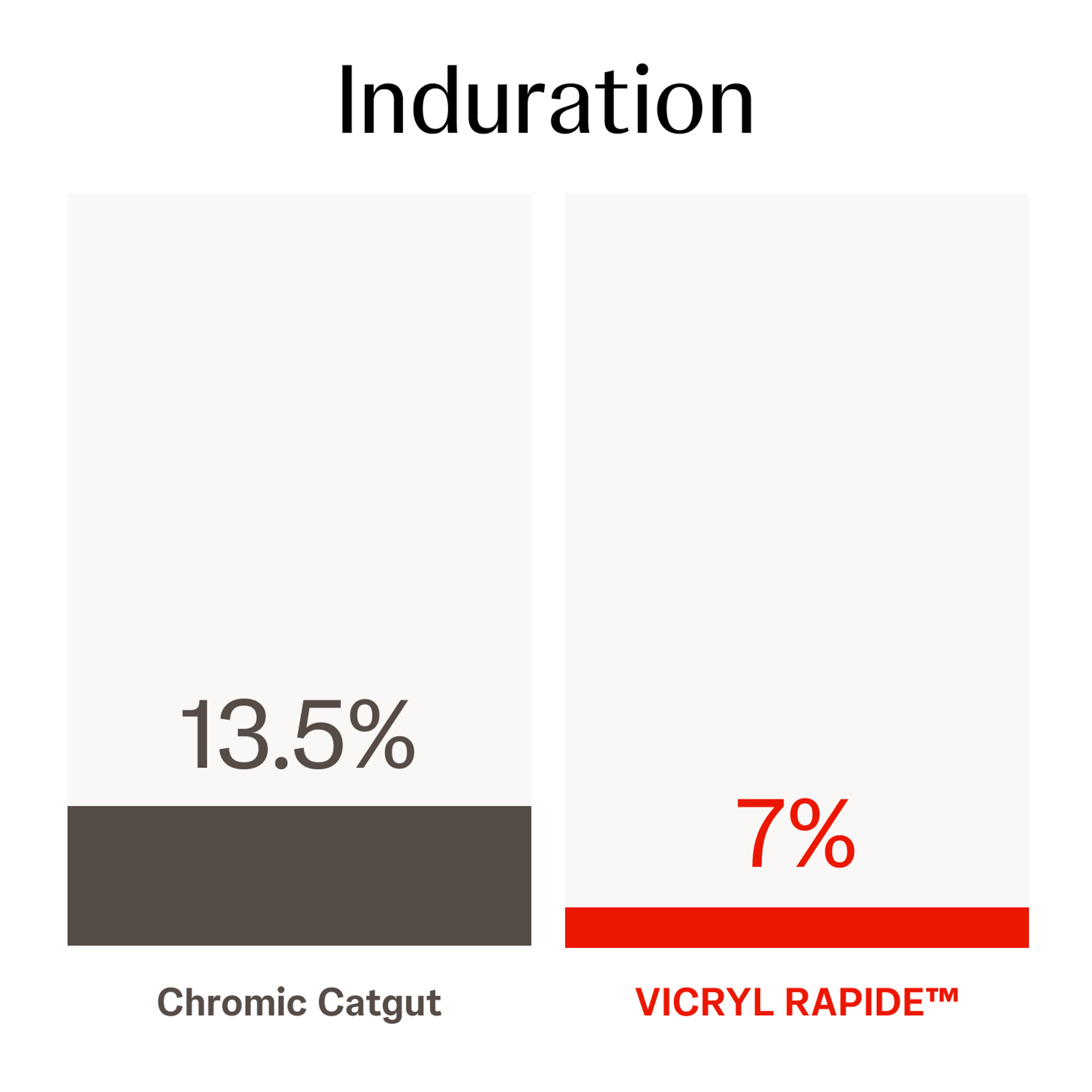
Ideal for episiotomy repair
VICRYL RAPIDE™ was the ideal suture material for episiotomy repair, which resulted in less perineal pain and better wound healing than Chromic Gut Sutures18CD
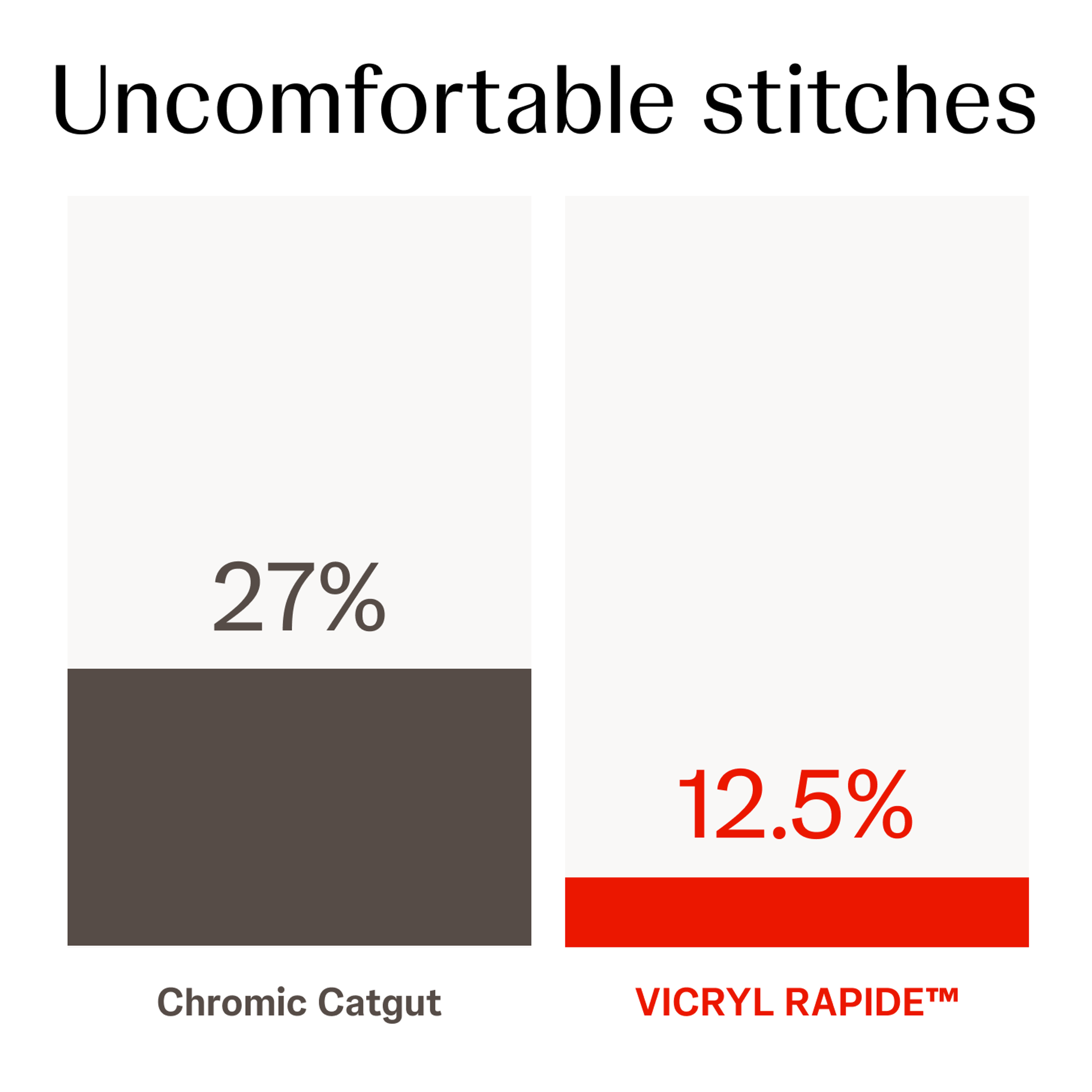
Uncomfortable stitches
VICRYL RAPIDE™: Significant reduction in uncomfortable stitches and analgesic use18CD
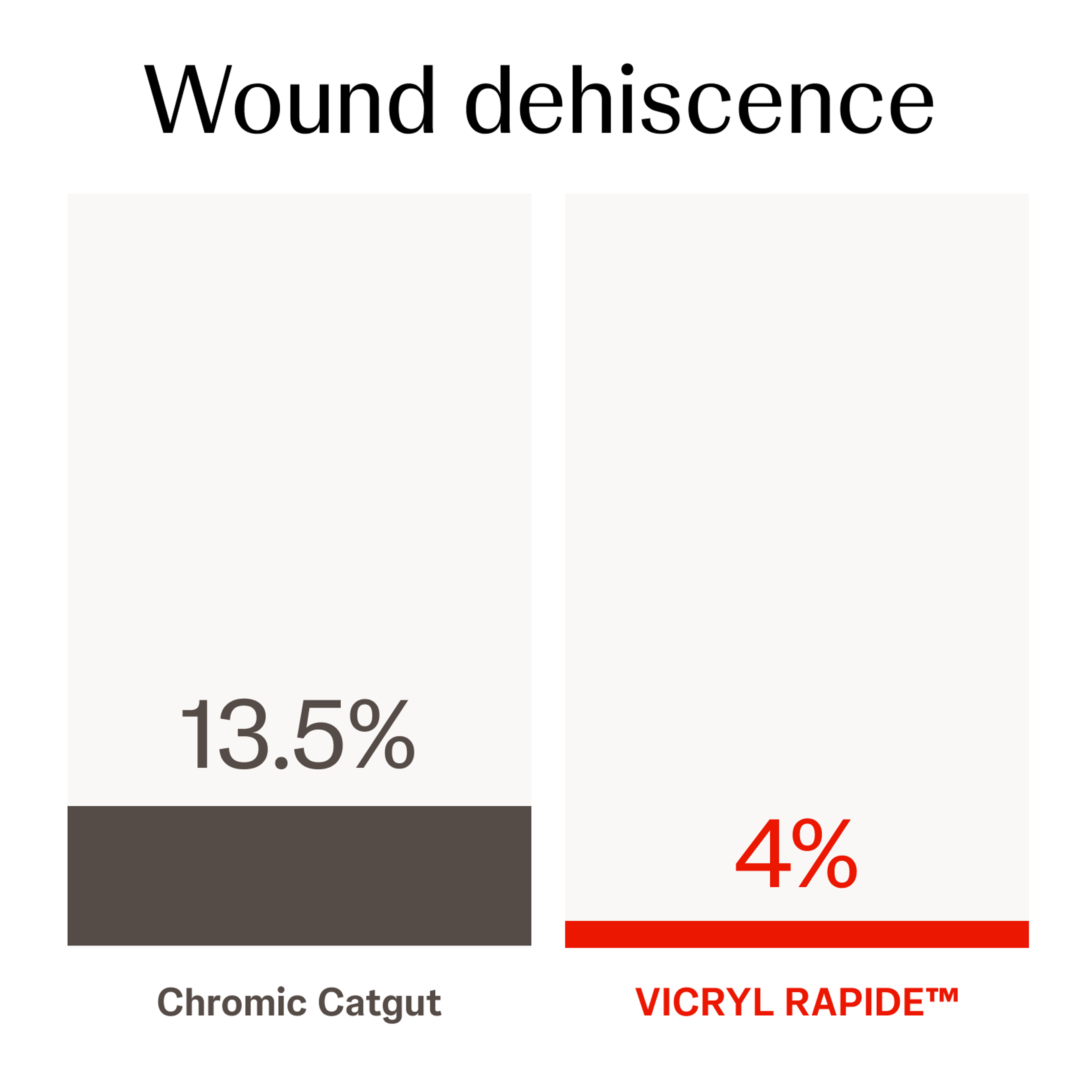
Wound dehiscence
VICRYL RAPIDE™: Significant reduction in wound dehiscence18CD
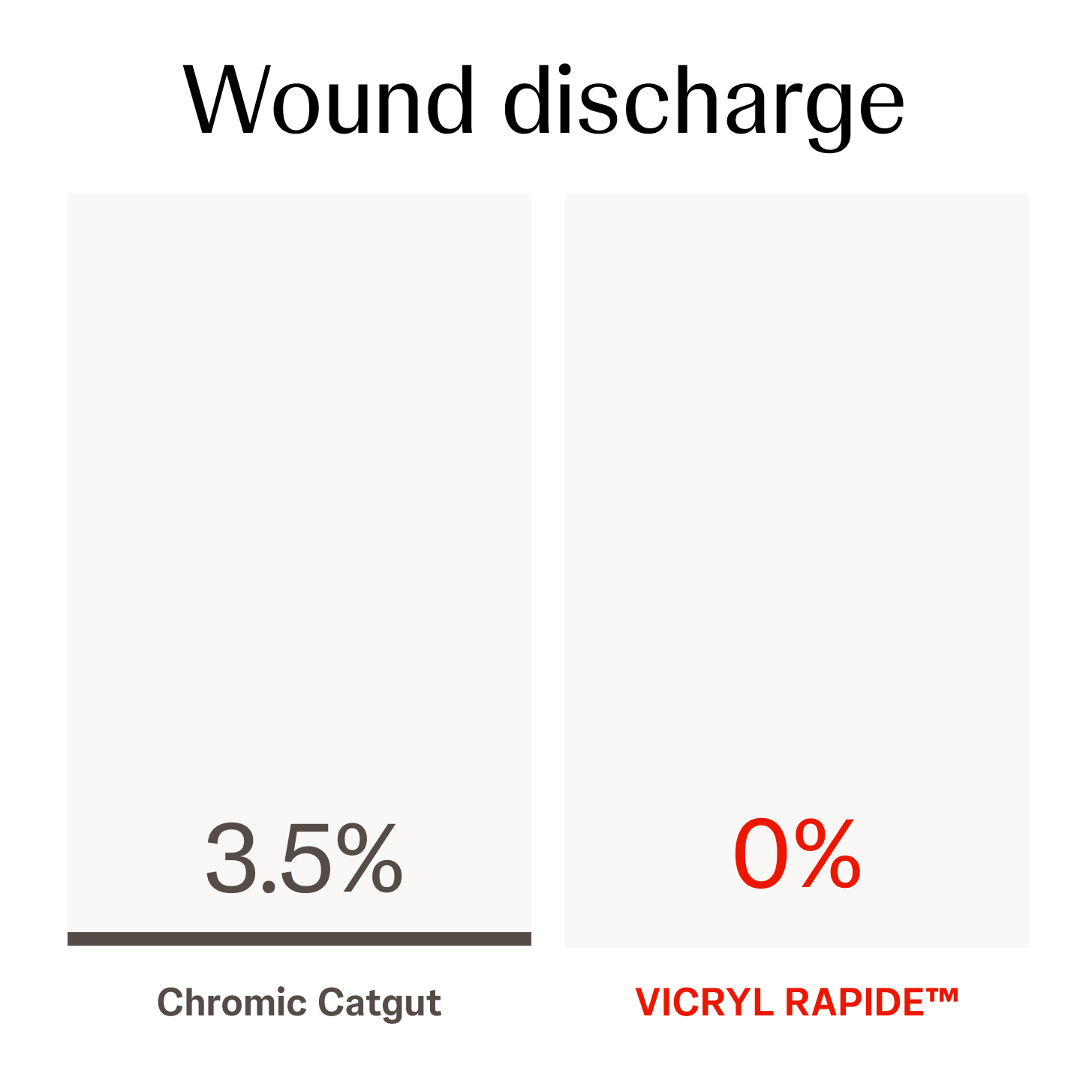
Wound healing
Dr. Russell Stankiewicz
Obstetrician/Gynocologist, PA
Supporting documentation
Related products

Fast Absorbing Surgical Gut Suture (Plain)
Fast Absorbing Surgical Gut Suture is a strand of collagenous material made from the submucosal layers of the small intestine of healthy sheep or the serosal layers of the small intestine of healthy cattle.1 This fast-absorbing suture is specifically designed for dermal (skin) suturing only and should only be used for external knot-tying procedures.1

Surgical Gut Suture Plain
An absorbable, sterile surgical suture composed of purified connective tissue (mostly collagen) derived from either the serosal layer of beef (bovine) or the submucosal fibrous layer of sheep (ovine) intestines. Surgical gut sutures are available in plain or chromic.1.2

Surgical Gut Suture Chromic
An absorbable, sterile surgical suture composed of purified connective tissue (mostly collagen) derived from either the serosal layer of beef (bovine) or the submucosal fibrous layer of sheep (ovine) intestines. Surgical gut sutures are available in plain or chromic.1,2 Chromic gut is processed to provide greater resistance to absorption.1,2
References
A. Compared to Gut Sutures
B. Based on internal bench performance evaluation data, comparison of the respective Instructions for Use (IFUs), and assessment of product attributes and functional characteristics; no clinical outcomes are implied.
C. Compared to Chromic Gut Sutures
D. RCT of 400 patients who underwent episiotomy repair. Perineal pain day 3-5 (32.5% vs 57%), wound induration day 3-5 (7% vs 13.5%), uncomfortable stitches 24-48 hrs (31.5% vs 48%) 3-5 days (12.5% vs 27%) p<0.05, wound dehiscence day 3-5 (4% vs13.5% (p < 0.05)), wound discharge (0% vs 3.5%), and wound infection (0% vs 4%)The third-party trademarks used herein are trademarks of their respective owners.
For complete indications, contraindications, warnings, precautions, and adverse reactions, please reference full package insert.
- VICRYL RAPIDE™ (polyglactin 910) Suture Instructions for Use. Ethicon, Inc.
- Wound Closure Manual. 2023. Johnson & Johnson
- Ethicon, Inc. Evaluation of Physical and Functional Properties of size 5-0 ETHICON Fast Absorbing Plain Gut Suture vs Corza Medical Express Gut Suture vs ETHICON VICRYL Rapide Suture vs ETHICON MONOCRYL Plus Suture. PE-2025-0012. 2025.
- Ethicon, Inc., SURGICAL GUT SUTURE Instructions for Use. 2022
- Nelson WJ. Guide to Suturing. J Oral Maxillofac Surg. 2015;73(8 Suppl):1–68
- Instructions for Use. Surgical Gut Suture. Johnson & Johnson Data on File
- Instructions for Use. Fast Absorbing Surgical Gut (Plain). Johnson & Johnson Data on File
- Polyglactin. Available at: Polyglactin - an overview | ScienceDirect Topics. Last accessed: November 2025
- Instructions for Use. MONOCRYLTM Plus Antibacterial. Johnson & Johnson Data on File
- Instructions for Use. Coated VICRYLTM PLUS Antibacterial (Polyglactin 910). Johnson & Johnson Data on File
- Fernandez-Guarino M et al. Aberrances of the wound healing process: A Review. Cosmetics. 2024;11(6):209
- Yaltirik et al. Comparison of four different suture materials in soft tissues of rats. Oral Dis. 2003;9(6):284–6
- Gazivoda D et al. A clinical study on the influence of suturing material on oral wound healing. Vojnosanit Pregl. 2015;72(9):765–769
- Kilavuz et al. Comparison of Absorbable and Nonabsorbable Sutures in Columellar Incision Closure in Rhinoplasty and Their Effects to Postoperative Scar. Facial Plast Surg. 2017;33(6):661–664
- Alinasab B et al. Rapid Resorbable Sutures Are a Favourable Alternative to Non-resorbable Sutures in Closing Transcolumellar Incision in Rhinoplasty. Aesth Plast Surg. 2016;40:449–452
- Singh AA. A prospective randomized control trial comparing one monofilament absorbable suture to a braided absorbable suture in children. JPRAS. 2008;61:1382–1384
- Datarkar AN et al. Comperative analysis of unilateral cleft lip closure using absorbable and nonabsorbable sutures: a randomised clinical study. Plast Aesthet Res. 2014;1:54–7
US_SRG_WOUN_418364