What we know about
hybrid surgery, and where it’s headed
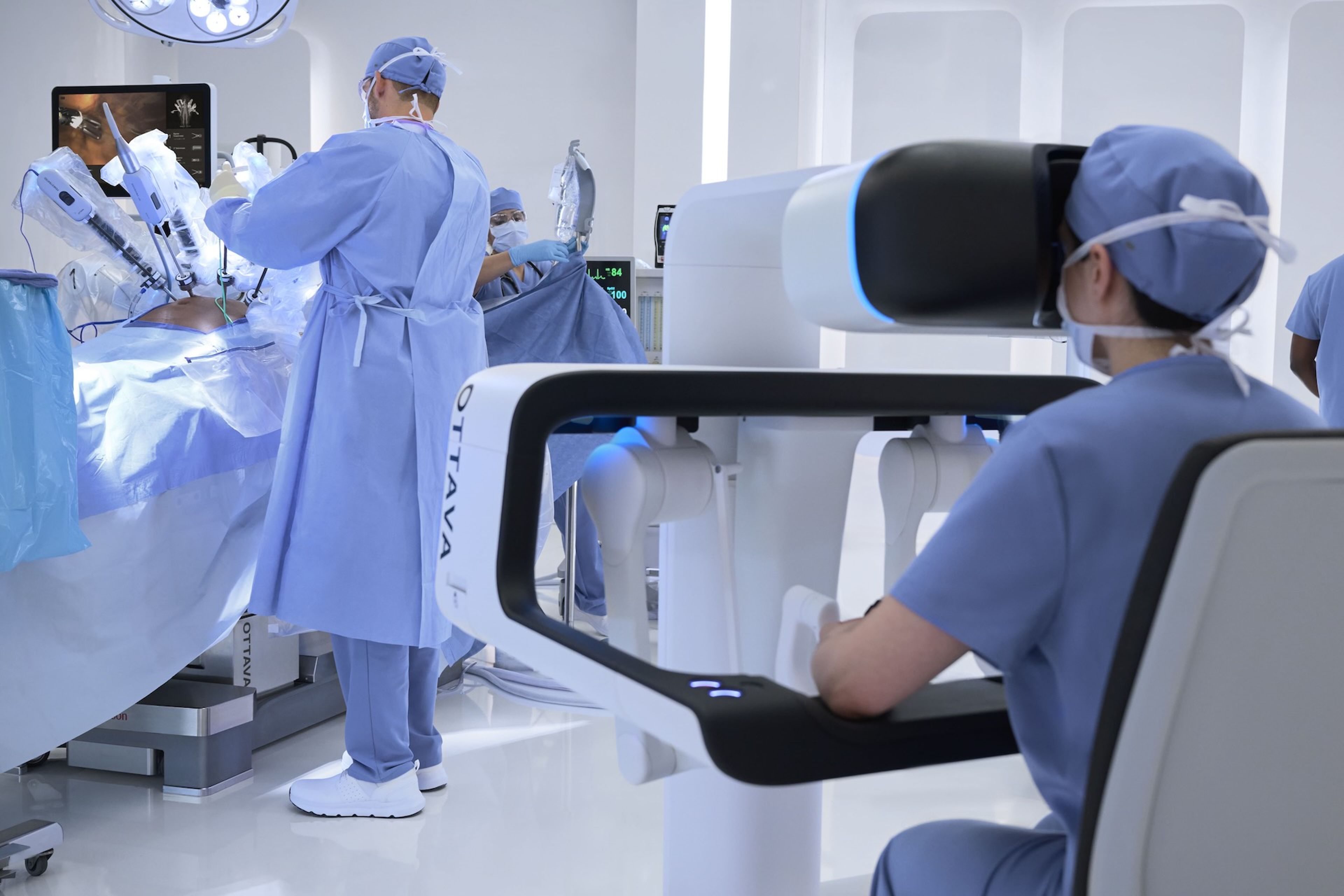
Surgeons are practicing at a crucial moment in medicine. While surgical technology, particularly robotics, has advanced rapidly, hospitals are facing mounting pressures from higher patient volumes, longer operative times and constrained resources.
A 2025 study in JAMA Network projected that hospital bed occupancy could reach 85% by about 2032 for adults,1 a level the authors describe as a critical threshold. A separate analysis of 1.7 million operations found operative times rose 3.1% between 2019 and 2023 as patient complexity increased.2
Against this backdrop, hybrid surgery has emerged as a practical evolution in care: combining the ergonomic, visualization and precision benefits of robotics with the freedom to, when necessary, deploy the most effective handheld technology at key moments in a procedure.
Here’s what we know now about hybrid surgery.
Flexibility is an advantage
Hybrid surgery is grounded in clinical choice. As Prachii Rojatkar, Ph.D., Global Strategic Marketing at Johnson & Johnson MedTech leading next-generation stapling development, puts it, surgeons must be able to adapt their approach to the specific anatomy, tissue conditions and demands of each case.

“In certain moments—particularly when tissue conditions are complex or efficiency is critical—surgeons may choose to rely on the stapling technology they trust most for that specific task,” Rojatkar explains. “That may mean stepping away from the console to use a bedside port or working in coordination with the bedside team. Hybrid surgery allows surgeons to choose the best solution for each step of the procedure without giving up the benefits robotics provides overall.”
Robotic systems are highly effective for many aspects of complex procedures, offering visualization, dexterity and ergonomics.3,4 However, procedures performed entirely robotically may not always be optimized with today’s robotic stapling technologies—particularly when tissue conditions are challenging or when efficiency is paramount.5
In these situations, integrating advanced stapling technology at the bedside can streamline workflows. In one single-center study of 105 patients undergoing robotic Roux-en-Y gastric bypass, a bariatric procedure, using laparoscopic staplers at the bedside instead of robotic staplers was associated with shorter procedure times and lower stapling costs.5
Importantly, this efficiency does not come at the expense of robotics. Surgeons can return to the console for portions of the procedure where robotic advantages are most impactful, maintaining the ergonomic and visualization benefits that robotic platforms deliver.
Hybrid surgery dovetails with a younger generation’s digital acumen

Many younger clinicians are digital natives who are comfortable moving between advanced technologies while maintaining full control over decision-making in the operating room.
As Jason Simms, Senior Principal Design Engineer, Robotic Instruments and Accessories at J&J MedTech, sees it, the surgical arena is “in an evolving state right now. Surgeons who grew up with digital tools intuitively understand how to integrate multiple technologies to achieve better performance.”
That mindset extends to device innovation as well. While robotic platforms continue to advance, handheld surgical technologies are evolving in parallel—becoming smaller, more precise and more reliable. Together, these innovations give surgeons more options.
When it comes to surgical technology, “we are always trying to make things smaller and more nimble and easier to place, with better surgeon visibility,” Simms explains. “We’re about miniaturization, having it highly controlled and having it highly reliable.”
Having options in surgical technology promotes better patient outcomes
While cost and efficiency matter, patient outcomes remain the primary driver of surgical decisions—which hybrid surgery supports by allowing surgeons to use the most appropriate technology for each task.
That’s because “you are using the best possible instrument for the job that you are trying to do,” Rojatkar says. “When surgeons can intelligently combine robotic and bedside approaches, they may reduce complications, avoid repeat procedures and improve overall patient outcomes.”
The published evidence is still early. In a small, matched study of robotic surgery for sigmoid and rectosigmoid colon cancer, a hybrid approach that substituted laparoscopic devices for some robotic instruments shortened operative time and lowered total costs. This was achieved mainly through staplers and ultrasonic devices, with safety and pathological outcomes comparable to fully robotic surgery.6 In the bariatric study above, no complications were reported with either stapling approach.5 Randomized evidence comparing hybrid and fully robotic colon surgery is still lacking, and a multicenter trial is now underway.7
The future of surgery is not about choosing between humans and machines—it is about ensuring they work together seamlessly. Advanced robotic platforms continue to demonstrate safety and effectiveness comparable to laparoscopic approaches.
As robotic platforms continue to evolve, including future systems with fully integrated technologies, the goal remains the same: empowering surgeons with flexibility, confidence and control. As Rojatkar puts it, “What matters is giving surgeons access to the right tools, at the right moment, for the right patient.”
References
- Leuchter RK, Delarmente BA, Vangala S, Tsugawa Y, Sarkisian CA. Health Care Staffing Shortages and Potential National Hospital Bed Shortage. JAMA Netw Open. 2025;8(2):e2460645. doi:10.1001/jamanetworkopen.2024.60645
- Childers, Christopher P et al. “Longitudinal Trends in Efficiency and Complexity of Surgical Procedures: Analysis of 1.7 Million Operations Between 2019 and 2023.” Journal of the American College of Surgeons vol. 241,5 (2025): 741-744. doi:10.1097/XCS.0000000000001588
- Reddy K, Gharde P, Tayade H, et al. Advancements in Robotic Surgery: A Comprehensive Overview of Current Utilizations and Upcoming Frontiers. Cureus 2023;15:e50415.
- Wee IJY, Kuo LJ, Ngu JC. A systematic review of the true benefit of robotic surgery: Ergonomics. Int J Med Robot 2020;16:e2113.
- Hafermann JO, Phelps JD, Tayash MFE. Comparing the effect of laparoscopic and robotic stapling on clinical outcomes, efficiency, and cost of robot-assisted Roux-en-Y gastric bypass. J Robot Surg 2025;19:65.
- Fukuda T, Numata M, Harada T, et al. Comprehensive revenue comparison of pure robotic vs. hybrid robotic surgery for sigmoid colon and rectosigmoid cancer. Surg Today 2025.
- Watanabe J, et al. Hybrid robot-assisted surgery versus conventional fully robotic surgery for colon cancer: study protocol for a multicenter, parallel-group, single-blind randomized controlled superiority trial. BMC Surg. 2026;26:393. doi:10.1186/s12893-026-03749-8
US_SRG_STAP_418576