PROCEED™ Surgical Mesh
Mesh optimized for strength and performance are critical for Intraperitoneal only mesh repair (IPOM) procedures. Trusted by surgeons for over a decade,A PROCEED™ Surgical Mesh is a macroporous, partially absorbable, tissue-separating mesh, combining large-pore mesh knitted with monofilament fibers and natural, absorbable tissue separating technology.1,2B



About this device
PROCEED™ Surgical Mesh is a sterile, thin, flexible laminate mesh comprised of an oxidized regenerated cellulose (ORC) fabric, and PROLENE™ Soft Polypropylene Mesh (a nonabsorbale polypropylene mesh encapsulated by a polydioxanone polymer). The ORC side provides a bioresorbable layer that physically separates the polypropylene mesh from underlying tissue and organ surfaces during the wound-healing period to minimize tissue attachment to the mesh. The polypropylene mesh side of the product allows for tissue ingrowth while the polydioxanone provides a bond to the ORC layer.
Specialties
Hernia
Procedures
Laparoscopic and Open Intraperitoneal/Intra-abdominal Ventral Hernia Repairs
Features & benefits

Bacteriostatic properties
Inhibits bacterial growth to help protect against mesh contamination.C In an in vitro study, PROCEED™ Mesh demonstrated bacteriostatic properties against bacteria commonly found in surgical site infections (MRSA, MRSE, VRE, and E. coli).3D

Strength & performance
PROCEED™ Surgical Mesh is designed to withstand the maximum intra-abdominal pressure in healthy adults4-6E and allows for versatility for both open and laparoscopic repairs.1

Comfortable healing
In a study of patients from the International Hernia Mesh Registry (IHMR), those receiving open hernia repair with PROCEED™ Mesh reported significant improvement in pain and movement limitations from baseline at 12 months postsurgery.7F
Supporting documentation
Related products
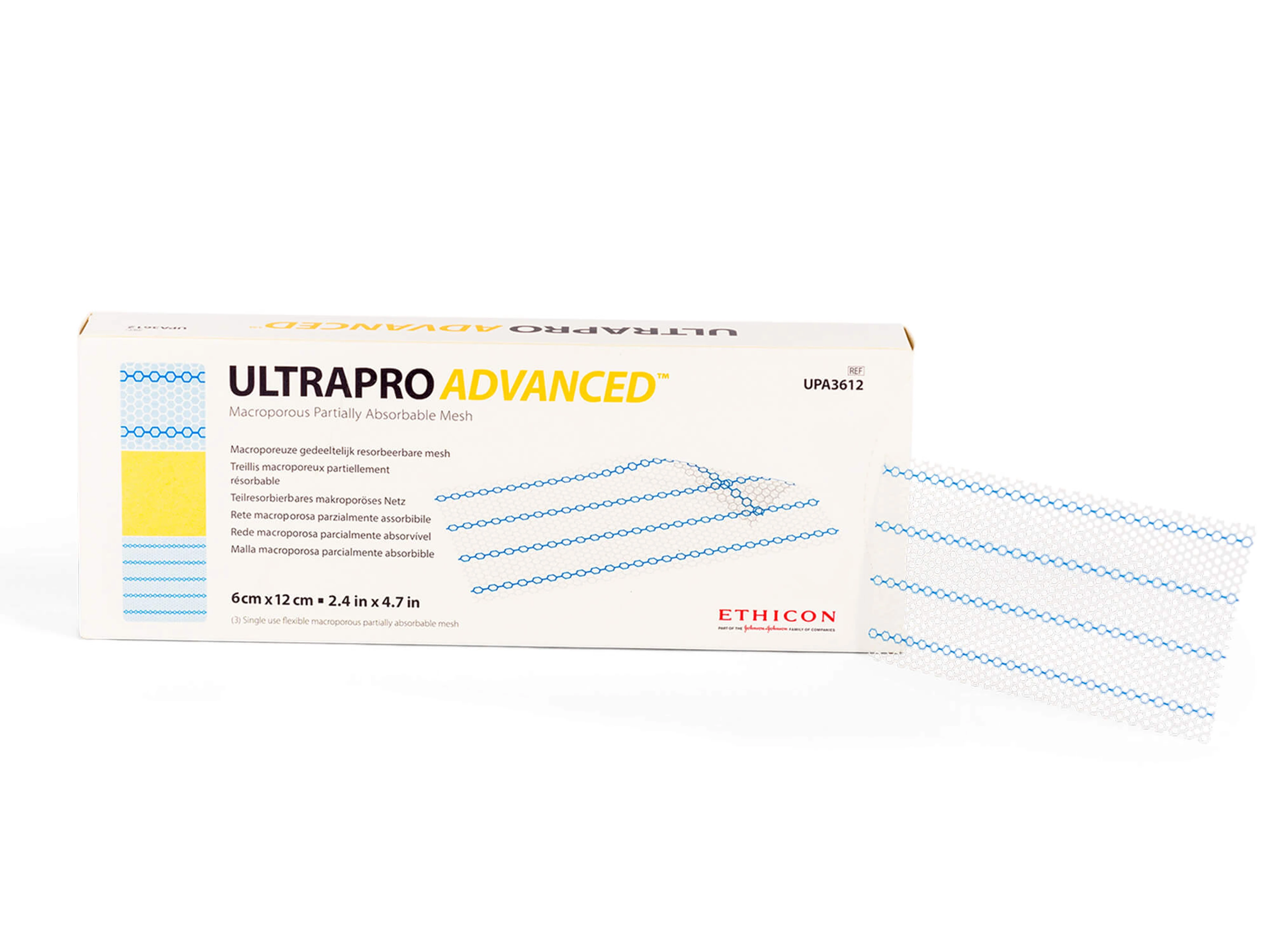
ULTRAPRO ADVANCED™ Macroporous Partially Absorbable Mesh
Built on the proven technology of ULTRAPRO™ Macroporous Partially Absorbable Mesh1, ULTRAPRO ADVANCED™ is designed to help optimize patient outcomes2,3and ease of use4,5 in inguinal and ventral hernia repair. Physiologically designed for comfortable healing6-8, it features a unique knitted mesh construction to promote good tissue ingrowth/integration.9A
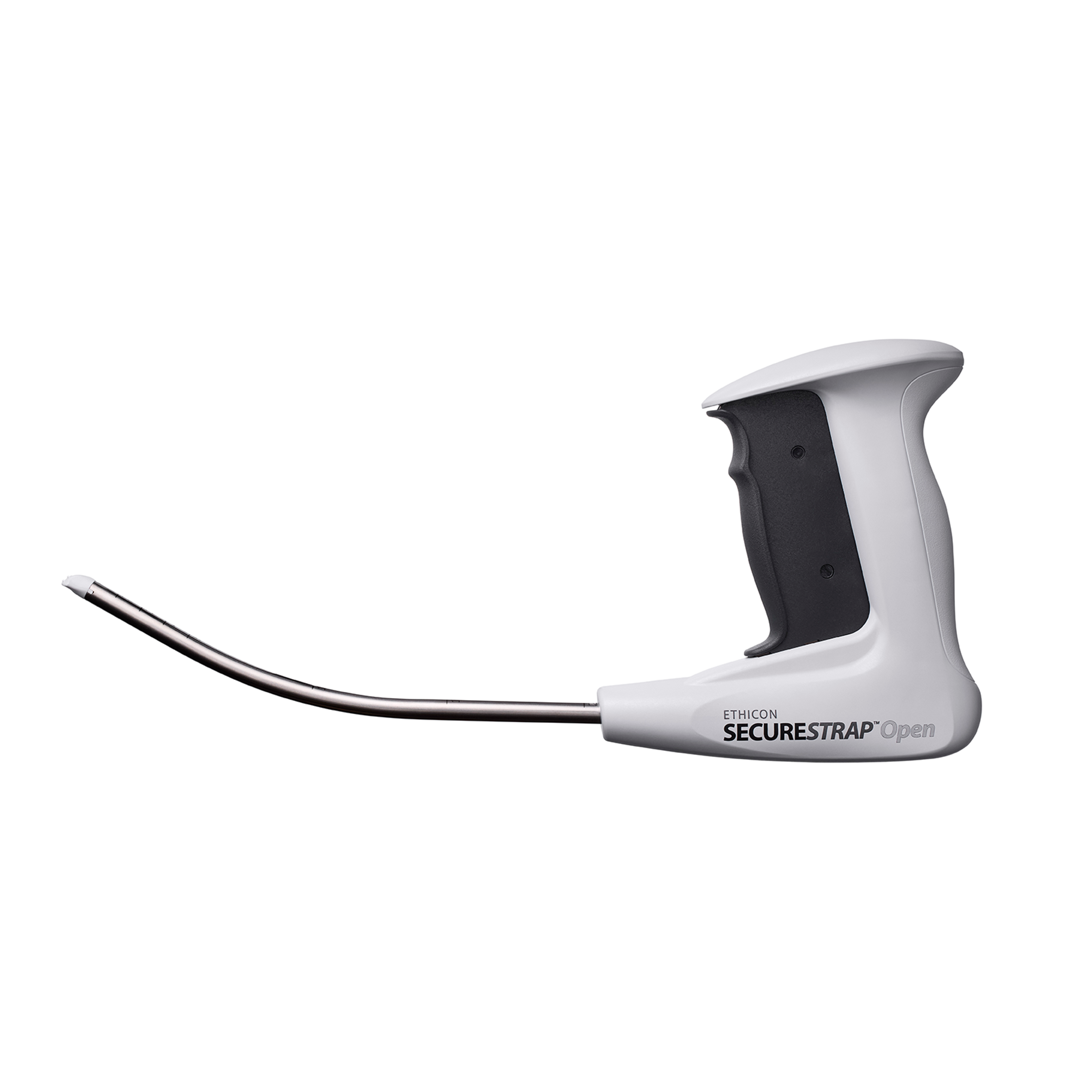
SECURESTRAP™ Open Absorbable Strap Fixation Device
SECURESTRAP™ Open Absorbable Strap Fixation Device is the first absorbable fixation device purposefully designed for the unique challenge of open ventral hernia repair.1 It features a low profile design to reduce exposure to viscera.2 Each strap, from the first to the last, deploys with a similar force — providing the reliability you need.3
.png?width=3840&quality=90&format=webp)
SECURESTRAP™ Absorbable Strap Fixation Device
Tissue capture, penetration and holding strength at multiple deployment angles are important factors when selecting a fixation device for hernia repair. SECURESTRAP™ Absorbable Strap Fixation Device is a market leading fixation device1A designed for acute holding strength at various deployment angles.2,3
References
A. WW FP&A Bravo System sales data from January 2010 through May 2021, showing PROCEED™ Hernia Device sales in the United States.
B. The oxidized regenerated cellulose (ORC) layer is designed to temporarily separate tissue/organ surfaces during healing.† Macroporous mesh contains core sizes >1mm
C. Clinical data unknown
D. An in vitro study (24 hour study with inoculum challenge in the range of 10^5‐10^6 CFU/mL) demonstrated bacteriostatic properties of PROCEED Surgical Mesh against MRSA, MRSE, VRE, E.coli
E. Shown in a preclinical study
F. Data from a prospective, longitudinal study of 157 patients receiving laparoscopic hernia repair using PROCEED™ Mesh from the IHMR. Hernia types repaired included incisional/ventral (75.1%), epigastric (5.1%), umbilical (18.5%) and trocar (1.3%). 77.7% (n=122) were primary repairs.
- PROCEED™ Surgical Mesh. Instructions for Use. Ethicon Inc. Somerville NJ. 2019
- Klosterhalfen B. The Lightweight and Large Porous Mesh Concept for Hernia Repair. Expert Rev Med. Device 2(1), 2005.Hernia (1997) 1:15‐21.
- Bhende, S. Study Report for Antibacterial Efficacy Evaluation of PROCEED Surgical Mesh using Parallel Streak Method. Ethicon, Inc. Jan_18_2018
- Vailhe E. Mesh Competitor Testing, Version 1. AST20150024. July 21, 2015. Ethicon, Inc.
- Cobb WS, Kercher KW, Heniford BT. The argument for lightweight polypropylene mesh in hernia repair. Surg Innov. 2005 Mar;12(1):6369.
- Cobb WS, Warren JA, Ewing JA, et al. Open Retromuscular Mesh Repair of Complex Incisional Hernia: Predictors of Wound Events and Recurrence. J Am Coll Surg. 2015;220:606613
- Bringman S, Tollens T, Murdoch J, Jones P, Mitchell J, McRoy L. Laparoscopic hernia repair surgery using a tissue-separating flat mesh (TSM)—12 month patient reported outcomes from the International Hernia Mesh Registry (IHMR). Poster presented at: 15th Annual Hernia Repair; March 13-16, 2013; Orlando, FL.
Clinical and technical support is available 24/7 at 1-877-ETHICON (384-4266)
For complete indications, warnings, precautions, and adverse reactions, please reference full package insert.
The third-party trademarks used herein are trademarks of their respective owners.
US_SRG_HERN_220078.1