Revolutionizing surgery with ETHICON™ 3D Stapling Technology
Because “good enough” is no longer good enough.

The U.S. healthcare system alone spends $3 billion a year on complications related to leaks and bleeding1
3D Stapling Technology is designed to strengthen staple lines and reduced potential leak pathways, minimizing the need to intervene so you can close without compensating.2-5
Maintain integrity without intervention
About half of bariatric surgeons experience nuisance bleeding or oozing and will intervene to mitigate complications.6
One continuous line of closure7
Offset staple legs distribute pressure more evenly for a consistent and secure staple line compared to traditional 2D staples.8
Performance-driven results backed by peers
14 peer-reviewed studies covering approximately 47,000 patients and 700 hospitals, spanning 9 countries and 4 continents.
50%
23%
61%
Re-engineering a century-old innovation
Since its inception, the surgical stapler has been vastly improved upon, but the staple itself has remained the same.
1877
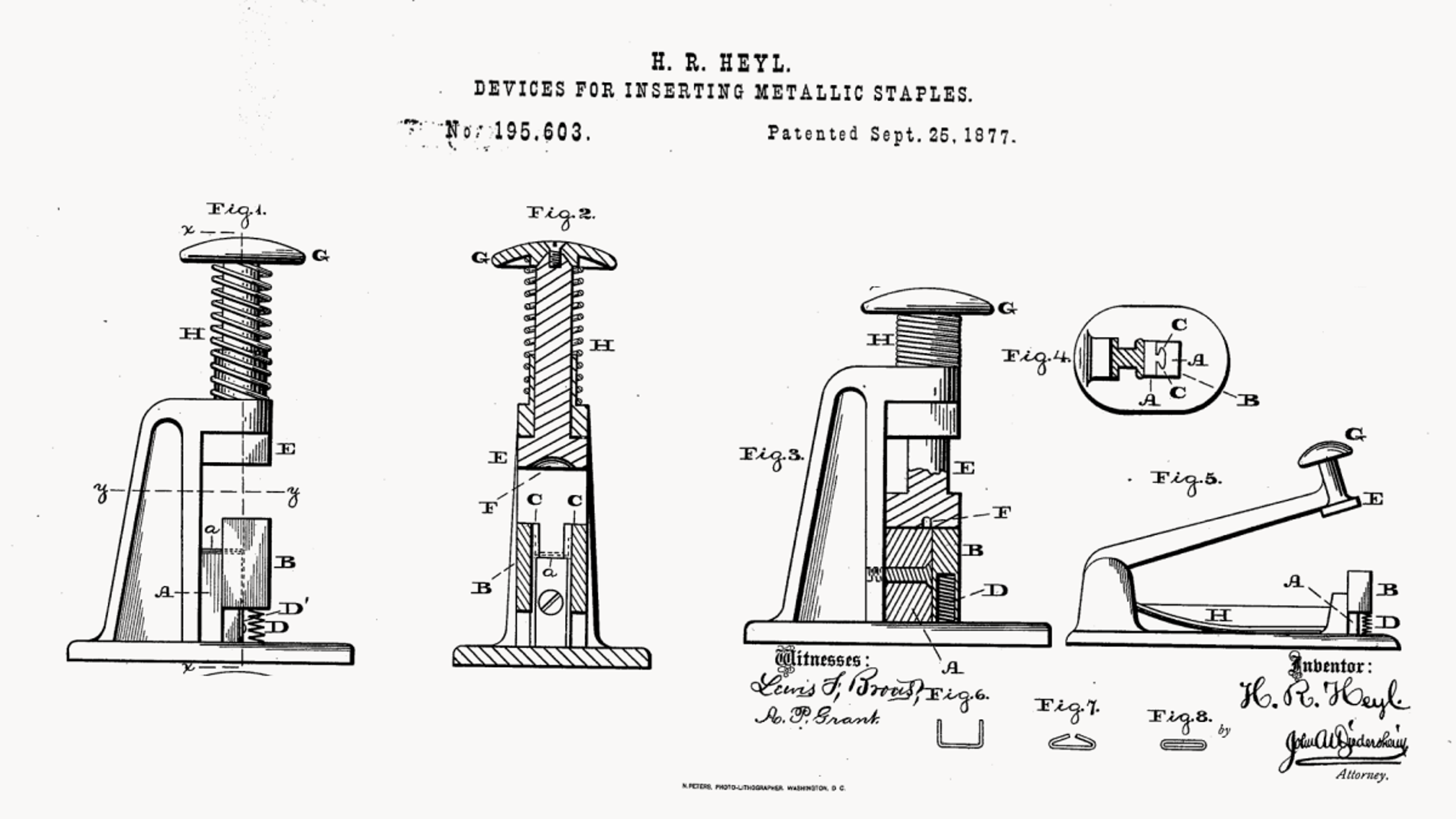
The first modern, pre-formed wire staple is filed for patent by Henry R. Heyl in Philadelphia, Pennsylvania.12
Patent for the first metallic staple by Henry R. Heyl, in Pennsylvania, September 1877.
1877
The first modern, pre-formed wire staple is filed for patent by Henry R. Heyl in Philadelphia, Pennsylvania.12
Patent for the first metallic staple by Henry R. Heyl, in Pennsylvania, September 1877.
1895
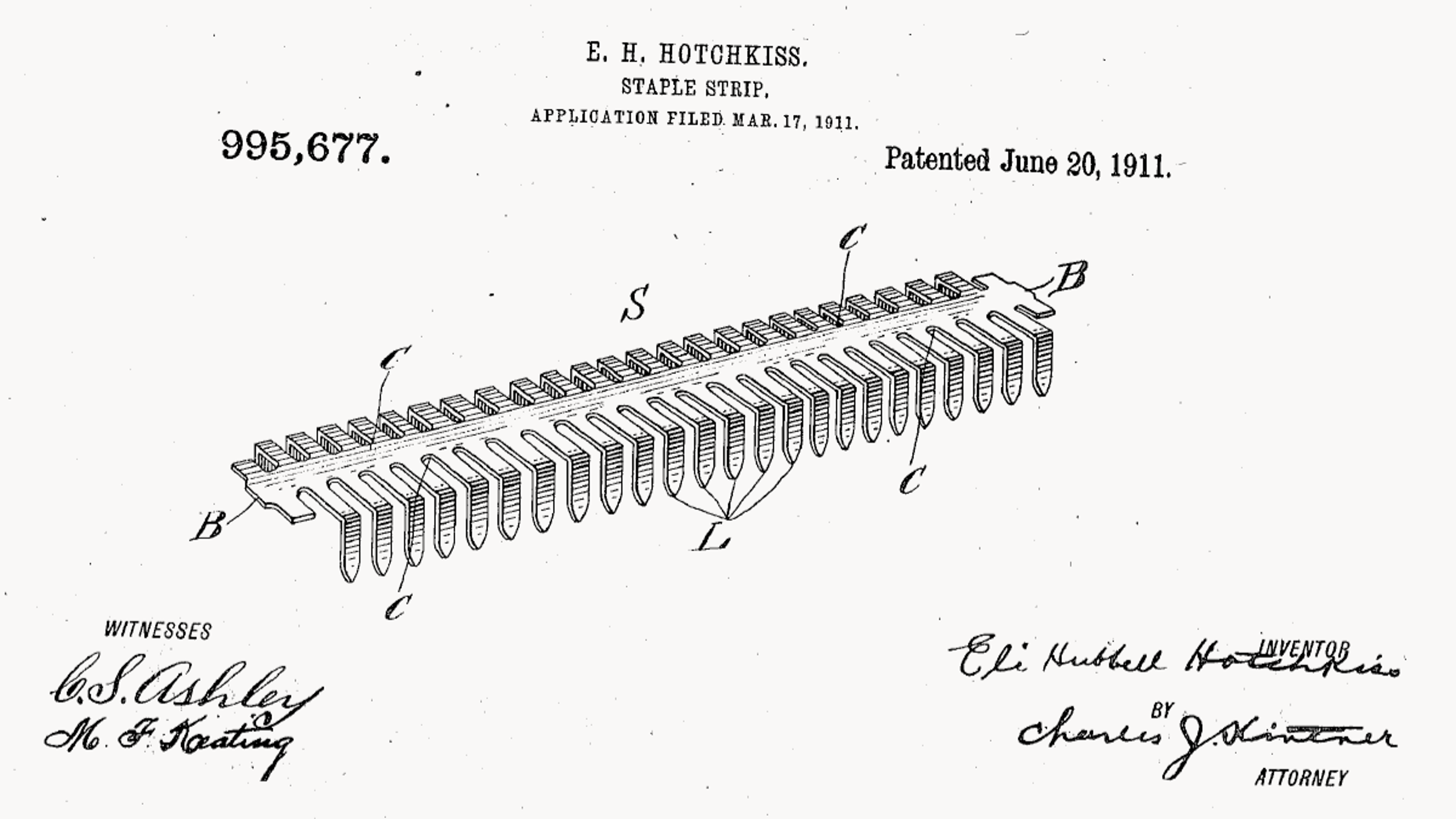
The first modern stapler, Hotchkiss No. 1, is developed by E.H. Hotchkiss Company in Norwalk, Connecticut. It was eventually patented and sold for commercial use.13
Patent for the staple strip by Eli H. Hotchkiss, New York, June 1911.
1895
The first modern stapler, Hotchkiss No. 1, is developed by E.H. Hotchkiss Company in Norwalk, Connecticut. It was eventually patented and sold for commercial use.13
Patent for the staple strip by Eli H. Hotchkiss, New York, June 1911.
1908
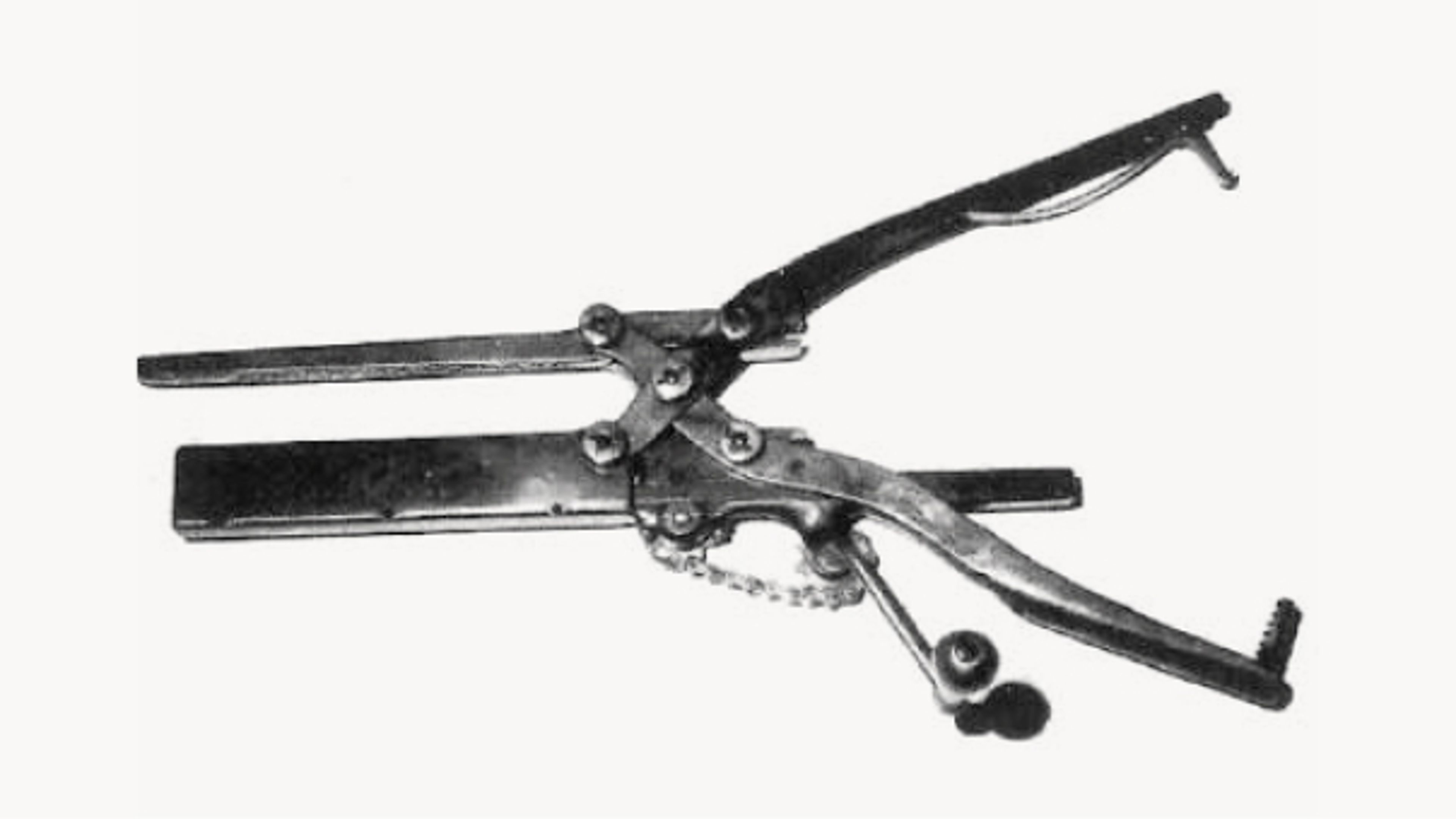
First surgical stapler, weighing nearly 8lbs, is developed by Hungarian professor and surgeon, Hümer Hultl and surgical instrument designer, Victor Fischer.14
First model of the Fischer-Hul̈tl stapler. Image courtesy of the HNM PCC Semmelweis Museum of Medical History, Budapest.
1908
First surgical stapler, weighing nearly 8lbs, is developed by Hungarian professor and surgeon, Hümer Hultl and surgical instrument designer, Victor Fischer.14
First model of the Fischer-Hul̈tl stapler. Image courtesy of the HNM PCC Semmelweis Museum of Medical History, Budapest.
1920s
Stapling is adopted into surgeries. A lightweight model is developed by a student of Hultl, Aladár Petz.14
Modern aseptic operating technique. Public Domain Mark. Source: Wellcome Collection.
1920s
Stapling is adopted into surgeries. A lightweight model is developed by a student of Hultl, Aladár Petz.14
Modern aseptic operating technique. Public Domain Mark. Source: Wellcome Collection.
1930s-1950s
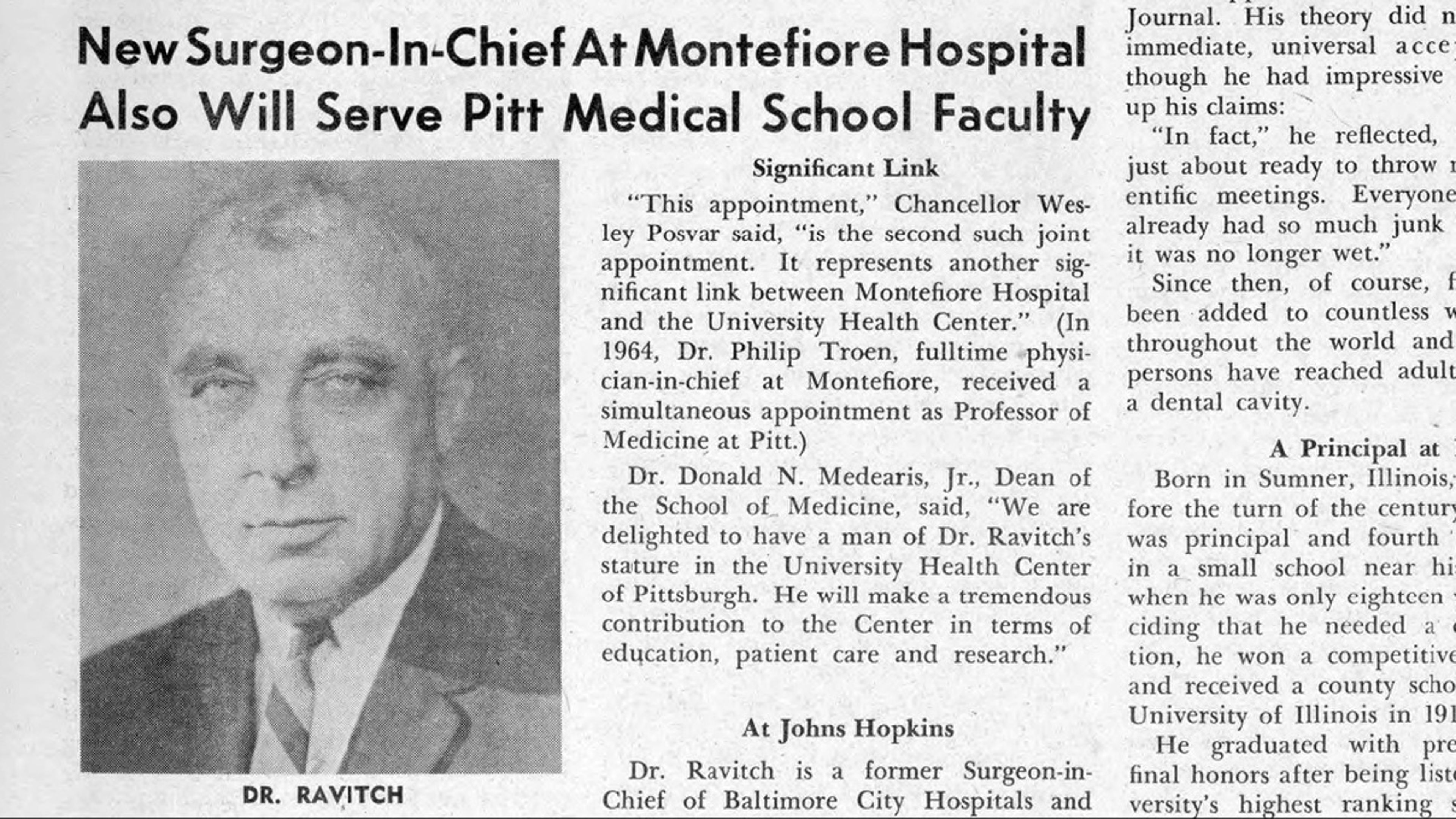
Surgical stapling is brought to America by Dr. Mark Ravitch and gains international popularity.15
Dr. Mark Ravitch, University of Pittsburgh. Courtesy ULS Digital Collections.
1930s-1950s
Surgical stapling is brought to America by Dr. Mark Ravitch and gains international popularity.15
Dr. Mark Ravitch, University of Pittsburgh. Courtesy ULS Digital Collections.

1960s-1970s
The surgical stapler continues to be improved upon including linear cutting and circular stapling.14
Patent for the first American surgical stapler with replaceable cartridge, Leon C. Hirsch, United States Surgical Corporation, 1966.
1960s-1970s
The surgical stapler continues to be improved upon including linear cutting and circular stapling.14
Patent for the first American surgical stapler with replaceable cartridge, Leon C. Hirsch, United States Surgical Corporation, 1966.
1980s-2010s
The market expands, resulting in stapler variation and innovation such as powered stapling and automated firing.14
A patient is being prepared for surgery in an operating room, May 1978.

1980s-2010s
The market expands, resulting in stapler variation and innovation such as powered stapling and automated firing.14
A patient is being prepared for surgery in an operating room, May 1978.
2014
J&J MedTech develops Gripping Surface Technology (GST).16
2014
J&J MedTech develops Gripping Surface Technology (GST).16
2019
ETHICON™ 3D Stapling Technology was designed by J&J MedTech.17
2019
ETHICON™ 3D Stapling Technology was designed by J&J MedTech.17
Experience the J&J ETHICON™ 3D Stapling portfolio

ETHICON™ 4000 Stapler System
Our latest innovation in laparoscopic stapling, the ETHICON™ 4000 Stapler and ETHICON™ 3D Reloads are designed to manage tissue complexities for the most secure staple line yet.1 Featuring proprietary 3D Stapling Technology for more evenly distributed pressure designed to reduce leaks and bleeds at the staple line.2A

ECHELON CIRCULAR™ Powered Stapler
Leaks during surgery can lead to serious complications, especially in challenging cases. The ECHELON CIRCULAR™ Powered Stapler significantly reduced leaks at the staple line and produced greater perfusion compared to the Medtronic EEA™ Circular Stapler with Tri-Staple™ Technology.1,2A The device combines two breakthrough innovations—3D Stapling and Gripping Surface Technologies—on one consistent and reliable powered platform.

ECHELON LINEAR™ Cutter
Leaks can have a devastating impact for patients and hospitals. Compounding this challenge, increasing patient complexity in some open procedures further elevates the risk of leaks. The ECHELON LINEAR™ Cutter provided 47% fewer staple line leaks compared to the PROXIMATE™ Linear Cutter and GIA™ Stapler with Tri-Staple™ Technology.1A

ECHELON CONTOUR™ Curved Cutter
Stapling deep within the pelvis creates challenges with achieving good staple formation, increasing the risk of leaks. The ECHELON CONTOUR™ Curved Cutter is engineered to address the difficulties of access and varying tissue conditions. It's designed to reduce leak risks1-3A through gentle tissue handling and a strong staple line, without compromising healing.3-5B
A platform proven in performance
References
A. In a meta-analysis.
B. Based on retrospective comparative analysis of hemostasis performance in a porcine model comparing the proportion of transections requiring intervention for the ETHICON 4000 Stapler with 3D Reloads (EC3D60C & ER60W) vs. the ECHELON™ 3000 with GST Reloads (ECH60C & GST60W), n=114.
C. In this preclinical/bench (experimental) evidence.
- Ethicon. Ethicon Specialty HEMA Project Harlow. 2018 Update [presentation]. Ethicon; 2018.
- Ethicon, Cornerstone More Evenly Distributed Pressure Claim Completion Report. 9.27.2023. Windchill Document #500916693.
- Johnson & Johnson and its affiliates. Evaluation of Leak Pathways for Claims: Echelon 4000 with 3D Re loads vs Echelon 3000 Stapler with GST. November 2024. Windchill # 502123426
- Ethicon, Silhouette Tissue Compression Simulation (FEA) [Claims] . 6.30.2020. Windchill Document #PRC093448
Ethicon, Even Compression Completion Report. 03.24.2021 . Windchill Document #500597518
Global Business Insights. Bariatric Hemostasis Segment Sizing Incidence and Key Learnings- U.S and EMEA. September 2019.
Ethicon, Tissue displacement and deformation of ethicon reno (reno) and medtronic dst (dst) circular staplers on harvested porcine colon. 1.23.2019. Windchill Document #PSB004770
Johnson & Johnson and its affiliates. Evaluation of Leak Pathways for Claims: Echelon 4000 with 3D Reloads vs Echelon 3000 Stapler with GST. November 2024. Windchill # 502123426
Martín-Arévalo J, Pla-Martí V, Huntley D, et al. Two-row, three-row or powered circular stapler, which to choose when performing colorectal anastomosis? A systematic review and meta-analysis. Int J Colorectal Dis. 2024;39:51
ETHICON. Project Royal Retrospective Analysis: Hemostasis Performance Evaluation of Royal Stapler with Royal 3D 60 mm White Reload Compared to the ECHELON™ 3000 Stapler with 2D Gripping Surface Technology 60 mm White Reload in Non-Survival Swine Gastroepiploic Models. 1/23/2025. Windchill #PRE 24-0058
Rojatkar P, Nalagatla AK, Ricketts CD, Clymer JW, Yosh E. The Science of Stapling: Staple Form. Surg Technol Int. Published online March 19, 2024. doi:10.52198/24.STI.44.GS1773
The Historical and Interpretive Collections of The Franklin Institute. Henry R. Heyl papers.
E.H. Hotchkiss Co. | Making Places. Connecticutmills.org. Published 2017. Accessed July 13, 2026.
Gaidry AD, Tremblay L, Nakayama D, Ignacio RC Jr. The History of Surgical Staplers: A Combination of Hungarian, Russian, and American Innovation. Am Surg. 2019 Jun 1;85(6):563-566. PMID: 31267894.
Nakayama DK. Mark Ravitch and How Surgical Stapling Devices Came to America. The American SurgeonTM. 2024;91(1):158-160. doi:10.1177/00031348241272325
ECHELON FLEX™ ENDOPATH™ Staplers Instructions for Use. Ethicon, Inc.
ECHELON CIRCULAR™ Powered Staplers Instructions for Use. Ethicon, Inc.
The third-party trademarks used herein are trademarks of their respective owners.
For complete indications, contraindications, warnings, precautions and adverse reactions, please reference full package insert.
US_SRG_STAP_419403